In this article
Stainless steel lunchboxes cost 3x more upfront than plastic but deliver better value over 5+ years through superior durability and heat resistance. <cite index='12-3'>With Australian parents spending an average of $2,400 annually on school lunch preparation</cite>, choosing the right lunchbox material impacts both your budget and food safety.
Stainless steel vs plastic lunchboxes: which material wins for Australian families?
The material choice between stainless steel and plastic fundamentally affects three key areas: long-term costs, food safety in Australian heat, and durability across school years. <cite index='10-7,11-1'>With 84% of Victorian parents packing daily school lunches</cite>, this decision impacts thousands of lunch preparations.
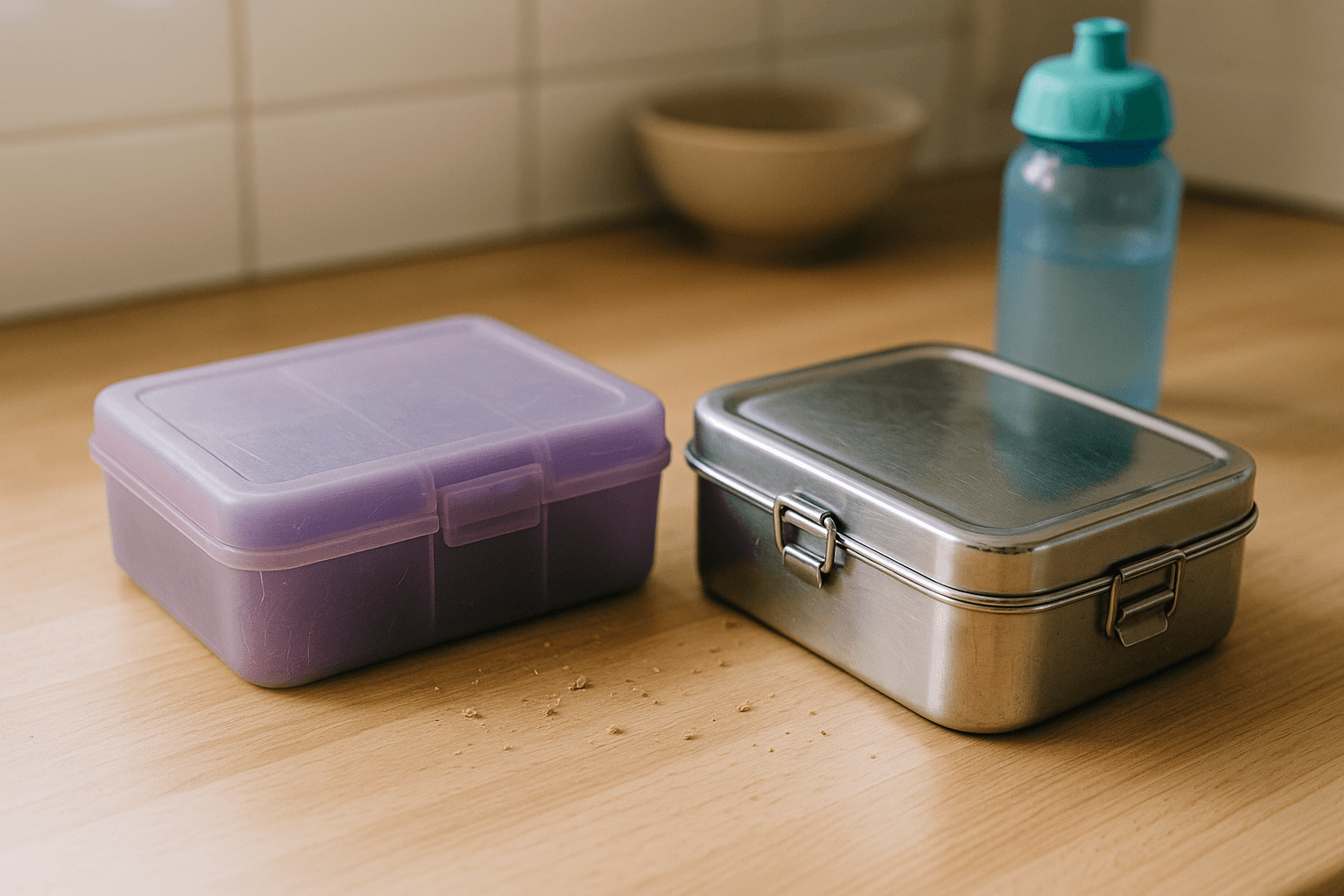
Plastic lunchboxes dominate the market due to lower upfront costs ($15-$35) and lighter weight, but typically require replacement every 18-24 months due to cracking, warping, or seal failure.
Stainless steel lunchboxes cost $40-$80 initially but maintain structural integrity for 5-7+ years, making them cost-effective despite the higher investment.
Australian summer conditions create unique challenges — car interiors reach 70°C+, which exceeds plastic's safe temperature range but poses no risk to stainless steel construction.
Plastic Lunchbox
$15-$35
- ·BPA-free materials
- ·Lightweight (150-200g)
- ·Dishwasher safe
- ·Wide design variety
Lower upfront cost
Lighter for young children
More colour options
Easy to replace
Warps in heat (60°C+)
Stains and retains odours
Requires replacement every 2 years
Seals degrade over time
Best for prep-Grade 2 or tight budgets
Stainless Steel Lunchbox
$40-$80
- ·Food-grade stainless steel
- ·Heat resistant to 120°C+
- ·No chemical leaching
- ·Dishwasher safe
Superior durability (5-7 years)
Heat and impact resistant
No odour or stain retention
Lower cost per use
Higher initial investment
Heavier (300-400g)
Limited design options
Potential weight concerns for young kids
Best long-term investment for Grade 3+
The real cost: plastic replacement cycles vs stainless steel investment
Plastic lunchboxes create hidden costs through frequent replacement cycles that most parents don't calculate upfront. A $25 plastic lunchbox lasting 18 months costs $0.67 per month of use, while a $60 stainless steel box lasting 6 years costs $0.83 per month — nearly identical monthly costs but vastly different replacement hassles.
Plastic replacement reality:
- Average lifespan: 1-2 school years before structural failure
- Replacement triggers: cracked hinges, warped lids, failed seals
- Hidden costs: new ice packs ($12-$16 per 4-pack) needed more frequently
- Total cost over primary school (7 years): $150-$200 in replacements
Stainless steel investment:
- Average lifespan: 5-7+ years with normal school use
- Maintenance: occasional deep clean, no part replacements needed
- Ice pack efficiency: superior heat retention reduces ice pack dependency
- Total cost over primary school: $40-$80 one-time purchase
7-Year Cost Comparison
The Bentgo Kids Lunch Box ($32) represents quality plastic construction but still requires replacement every 2-3 years. The Yumbox Original ($65) offers stainless steel durability that justifies the price difference through longevity.
Safety showdown: what Australian parents need to know
Both BPA-free plastic and food-grade stainless steel meet Australian safety standards, but their performance differs significantly under real-world school conditions.
Plastic safety considerations:
- Modern BPA-free plastics are safe when used within temperature limits
- Microplastic leaching increases with repeated heating/cooling cycles
- Discolouration and persistent odours indicate material breakdown
- Safe temperature range: up to 60°C before structural changes occur
Stainless steel safety advantages:
- Zero chemical leaching risk regardless of temperature exposure
- Maintains food integrity without flavour transfer
- No material degradation from repeated washing cycles
- Safe temperature range: exceeds 120°C without structural impact
Australian Summer Reality Check
Car interiors reach 70°C+ on 35°C days. Plastic lunchboxes left in hot cars risk warping and seal failure, potentially compromising food safety for the entire school term.
The key safety difference isn't toxicity — both materials are safe when properly maintained — but rather performance degradation over time. Stainless steel maintains consistent safety standards throughout its lifespan, while plastic safety depends on recognising when replacement is needed.
For families following Australian lunchbox food safety challenges, material choice directly impacts your ability to maintain safe food temperatures during transport and storage.
Weight, durability and age-appropriate recommendations
Weight concerns are valid for younger children, but the durability benefits of stainless steel become more valuable as children develop strength and responsibility for their belongings.
Prep to Grade 2 (ages 4-7):
- Plastic weight advantage: 150-200g vs 300-400g for stainless
- Carrying capacity: shorter school days, less additional gear
- Damage risk: higher likelihood of drops and rough handling
- Recommendation: Quality plastic with planned 2-year replacement
Grade 3-6 (ages 8-12):
- Weight tolerance: children comfortably carry 400g+ lunchboxes
- Responsibility level: better care of belongings, fewer losses
- Cost consideration: 4+ remaining school years justify stainless investment
- Recommendation: Upgrade to stainless steel for long-term value
High school (ages 13+):
- Weight irrelevant: teenagers carry laptops, textbooks, sports gear
- Independence factor: fewer parental replacements needed
- Longevity value: 6-year investment through to graduation
- Recommendation: Stainless steel essential for durability
Age-Based Transition Strategy
Prep-Grade 2: Start with plastic
Choose quality plastic like Sistema Bento ($22) for lighter weight. Budget for replacement in Grade 3.
Grade 3: Assess and upgrade
If current plastic shows wear, upgrade to stainless. If still functional, continue until replacement needed.
Grade 4+: Commit to stainless
Any new purchases should be stainless steel (Yumbox Original $65) for remaining school years.
The Munchkin Bento Toddler Lunch Box ($18) works well for younger children, while the Yumbox Tapas ($75) provides stainless steel durability sized for older students.
Australian summer heat: which material wins?
Australian summer conditions create the strongest argument for stainless steel lunchboxes. The temperature extremes experienced in school bags, cars, and outdoor eating areas exceed plastic's safe operating range.
Heat impact on plastic:
- Structural failure: warping begins at 60°C, common in Australian conditions
- Seal degradation: rubber gaskets lose elasticity in repeated heat cycles
- Food safety risk: compromised seals allow bacterial growth
- Ice pack dependency: requires more cooling to maintain safe temperatures
Heat advantages of stainless steel:
- Temperature stability: maintains structural integrity to 120°C+
- Thermal mass: stays cooler longer without additional cooling
- Consistent sealing: metal construction maintains lid fit regardless of temperature
- Reduced ice pack costs: superior insulation properties lower cooling requirements
Summer Performance
Plastic in 35°C heat
4-5 hours
Safe food temp with 2 ice packs
Stainless in same conditions
6-7 hours
Safe food temp with 1 ice pack
For families researching ice pack effectiveness testing, stainless steel lunchboxes consistently require fewer ice packs to maintain safe food temperatures, reducing both costs and bag weight.
Pairing stainless steel lunchboxes with quality insulated lunch bags creates a thermal system that outperforms plastic alternatives in Australian conditions.
Cleaning, maintenance and everyday practicality
Daily maintenance requirements differ significantly between materials, affecting the long-term practicality of your choice.
Plastic maintenance reality:
- Hand washing recommended to prevent warping in dishwasher heat
- Staining occurs within 6-12 months (tomato-based foods, berries)
- Odour absorption requires deep cleaning with baking soda solutions
- Lid and seal replacement often needed before container replacement
- Visual degradation affects food presentation and child acceptance
Stainless steel maintenance:
- Fully dishwasher safe on any cycle without damage risk
- No staining or odour absorption regardless of food types
- Fingerprint removal with standard kitchen cleaning products
- Seals and lids maintain functionality for entire product lifespan
- Consistent appearance maintains food presentation standards
Daily Cleaning Reality
Pros
Dishwasher safe without restrictions
No staining from any food types
Zero odour retention
Maintains appearance long-term
Simple fingerprint removal
Cons
Shows fingerprints more readily
Requires occasional deeper clean for shine
Metal surfaces can feel cold initially
The cleaning advantage heavily favours stainless steel for time-poor parents. A plastic lunchbox requiring hand washing and stain treatment adds 2-3 minutes to daily routines, while stainless steel goes straight into the dishwasher without special care.
Making the switch: practical transition tips for your family
Transitioning from plastic to stainless steel lunchboxes requires strategic timing and child buy-in to ensure successful adoption.
Testing phase approach:
- Purchase one stainless steel lunchbox during school holidays
- Test weight comfort with your child's current school bag setup
- Pack familiar foods to isolate any taste perception changes
- Assess cleaning routine integration over 2-3 weeks
Child acceptance strategies:
- Involve children in colour and style selection within stainless options
- Emphasise the "grown-up" nature of metal lunchboxes
- Demonstrate durability by showing how plastic boxes break vs metal boxes
- Pack special treats for the first week to create positive associations
Successful Transition Checklist
Weight mitigation strategies: For families concerned about the additional weight, pairing stainless steel lunchboxes with ergonomic insulated lunch bags distributes weight more effectively and provides additional thermal protection.
Budget timing: Rather than replacing all plastic lunchboxes immediately, implement gradual replacement as plastic boxes fail. This spreads the $50-$80 per child investment across 12-18 months while building experience with stainless steel performance.
Try recipes like Mini Chicken and Corn Frittata Cups or Tuna and White Bean Patties to test how different foods perform in stainless steel compartments.
Free Lunchbox Planning Cheat Sheet
20 tested lunchbox ideas that work in any container material
Honest pros and cons: side-by-side comparison
After testing both materials across multiple school years, the honest assessment shows clear winners in different categories.
Plastic lunchbox advantages:
- Upfront cost: $15-$35 vs $40-$80 for comparable stainless options
- Weight: 150-200g makes significant difference for prep-Grade 2 students
- Design variety: Wider range of colours, patterns, and character themes
- Replacement accessibility: Available at supermarkets, discount stores
- Child preference: Often preferred by younger children for visual appeal
Plastic lunchbox disadvantages:
- Replacement cycle: Every 18-24 months adds up to $150-$200 over primary school
- Heat sensitivity: Australian summer conditions cause warping and seal failure
- Maintenance burden: Staining and odour retention requires extra cleaning effort
- Performance degradation: Food safety compromised as seals age
Stainless steel advantages:
- Durability: 5-7 year lifespan eliminates replacement hassles
- Heat resistance: Australian conditions don't affect performance
- Food safety: No chemical leaching or material degradation concerns
- Low maintenance: Dishwasher safe without special care requirements
- Cost efficiency: Lower cost per use despite higher upfront investment
Stainless steel disadvantages:
- Initial investment: $40-$80 requires budget planning
- Weight factor: 300-400g may challenge younger children
- Limited designs: Fewer colour and pattern options
- Cold sensation: Metal surface feels cold initially (cosmetic issue only)
For Australian families, stainless steel delivers superior value over primary school years despite higher upfront costs. The heat resistance and durability justify the investment for Grade 3+ students.
Which lunchbox material is worth the investment for your family?
The decision between stainless steel vs plastic lunchboxes depends on your child's age, your budget timeline, and Australian climate considerations.
Choose plastic lunchboxes if:
- Your child is in Prep-Grade 2 and weight is a primary concern
- Budget requires spreading costs over time rather than upfront investment
- You prefer frequent style changes and design variety
- Your family moves frequently and prefers easily replaceable items
Choose stainless steel lunchboxes if:
- Your child is Grade 3+ with strength to carry additional weight
- You want to eliminate replacement cycles and maintenance hassles
- Australian summer heat affects your school bag storage conditions
- Long-term cost efficiency outweighs upfront investment concerns
Hybrid strategy recommendation: Start with quality plastic for Prep-Grade 2 (Sistema Bento Lunch Box at $22), then upgrade to stainless steel (Yumbox Original at $65) from Grade 3 onwards. This approach balances age-appropriate weight concerns with long-term durability benefits.
Calculator
Lunchbox Investment Calculator
Time to recover the investment
3 months
Budget perspective: With Australian families spending $2,400 annually on school lunch preparation, a $65 stainless steel lunchbox represents just 2.7% of annual lunch costs while lasting 5-7 years. The investment becomes negligible when viewed against total lunch expenses.
Real-world verdict: For Australian conditions, stainless steel lunchboxes provide better value despite higher upfront costs. The combination of heat resistance, durability, and reduced maintenance makes them the practical choice for families planning beyond the current school year.
The Bentgo Kids Lunch Box offers a middle ground at $32 with better plastic construction, while the Yumbox Original at $65 represents the gold standard for stainless steel durability and compartment design.
Common Lunchbox Material Questions
How useful was this?
Get 20 Lunchbox Ideas That Work in Any Container
Tested recipes for both plastic and stainless steel — print and stick on your fridge
Written by Pat
Dad of two, Melbourne. Half Chinese, raised on incredible food. I make quick school lunches and test every piece of gear before recommending it. No bento art — just real food made with love.