In this article
Most lunchbox accessories sold to parents are designed to look cute on Instagram, not solve real problems. The accessories that actually save money tackle specific Australian challenges: keeping food safe in 35°C heat, preventing soggy sandwiches and reducing the daily disposable waste that costs families $400+ per year.
After 3 years of testing accessories with my own kids and tracking costs, I've identified exactly which ones pay for themselves — and which ones are marketing fluff.
Which lunchbox accessories kids actually need
The best lunchbox accessories solve three core problems for Australian families: food safety in heat, preventing waste from soggy or mixed foods, and surviving the daily school bag tumble. Everything else is optional.
The 4-hour rule matters here
In Australian temperatures, packed food becomes unsafe after 4 hours without proper cooling. Quality accessories extend this window and prevent food poisoning.
Accessories that address these problems directly reduce your weekly spending. When food stays fresh, edible and appealing, kids eat more of what you pack — reducing waste and the need for expensive school canteen backup purchases.
Most parents buy accessories based on convenience or aesthetics. The smart approach is cost-per-use analysis over multiple school years. A $20 ice pack that lasts 4 years costs $0.01 per school day. Single-use alternatives cost $0.40 daily.
Silicone dividers and bento cups that prevent food mixing
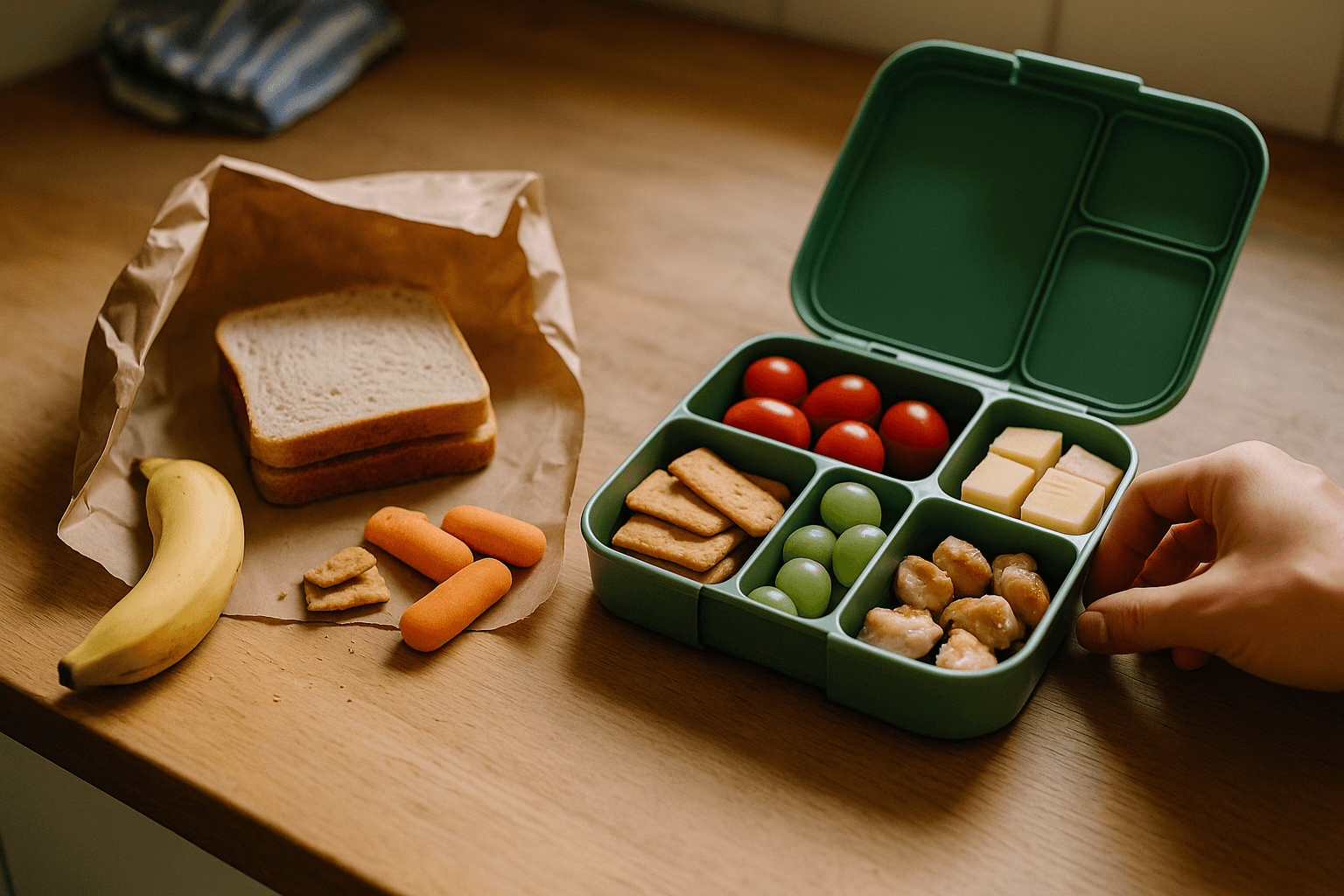
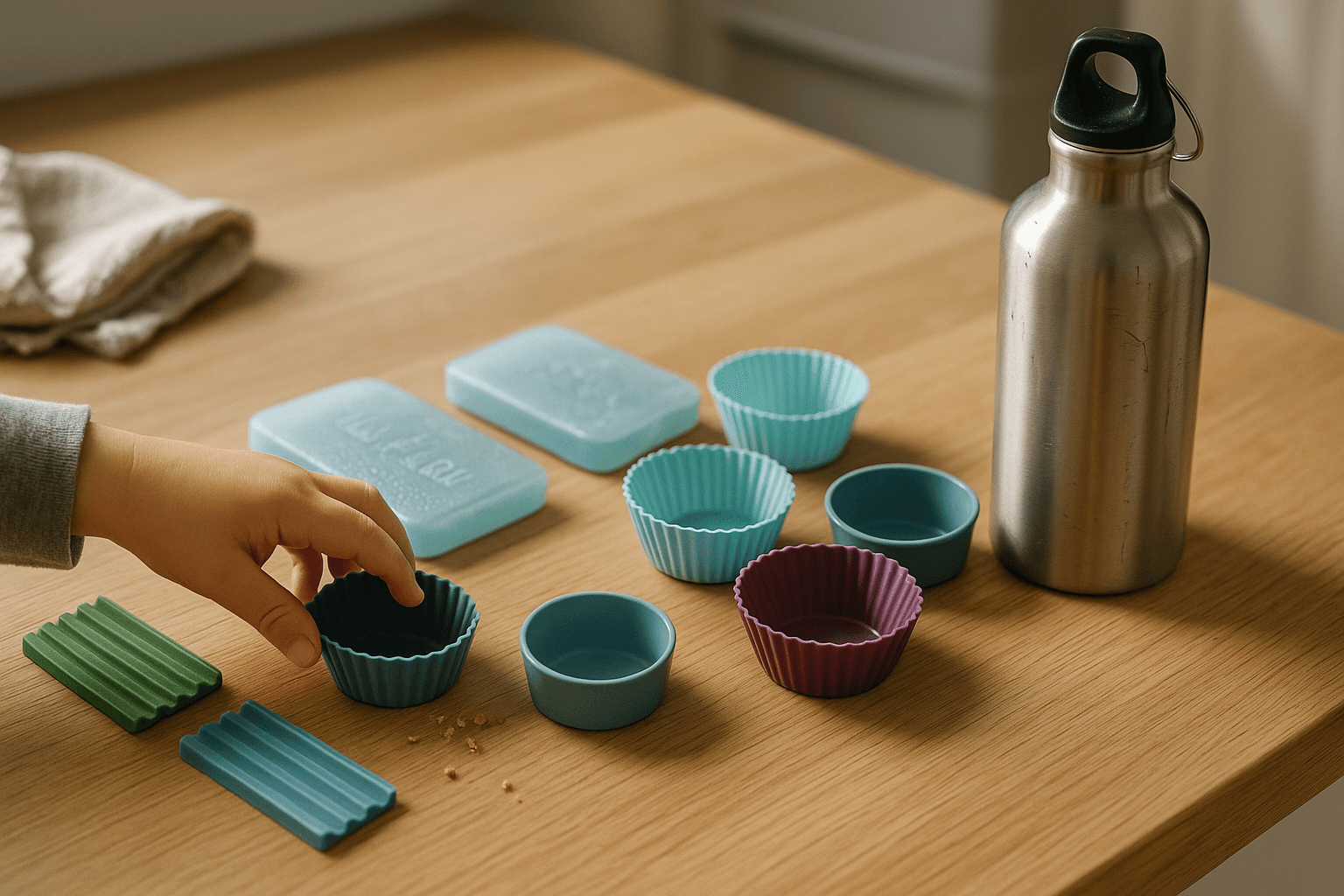
Silicone dividers are the unsung heroes of lunchbox accessories. They keep wet foods (yogurt, dips, cut fruit) separate from dry foods (crackers, sandwiches) — preventing the soggy mess that kids refuse to eat.
Quality silicone dividers cost $8-15 for a set and fit most standard lunchboxes including Yumbox Original, Bentgo Kids and Sistema Bento models. They're dishwasher-safe and last 3-4 years with daily use.
Silicone Dividers
Pros
Prevent food mixing and sogginess
Fit multiple lunchbox brands
Dishwasher safe, last 3+ years
Replace multiple single-use containers
Cons
Initial cost higher than disposables
Need washing daily
Can stain with tomato-based foods
Reusable bento cups serve the same function for smaller portions. Stainless steel versions ($12-20 for a 5-pack) don't stain and survive drops better than silicone, but they're heavier in school bags.
The cost breakdown over 5 school years: silicone dividers at $0.006 per day vs single-use plastic containers at $0.05 per day. For families packing lunch daily, that's $55 in savings per child.
Ice packs that work in Australian heat
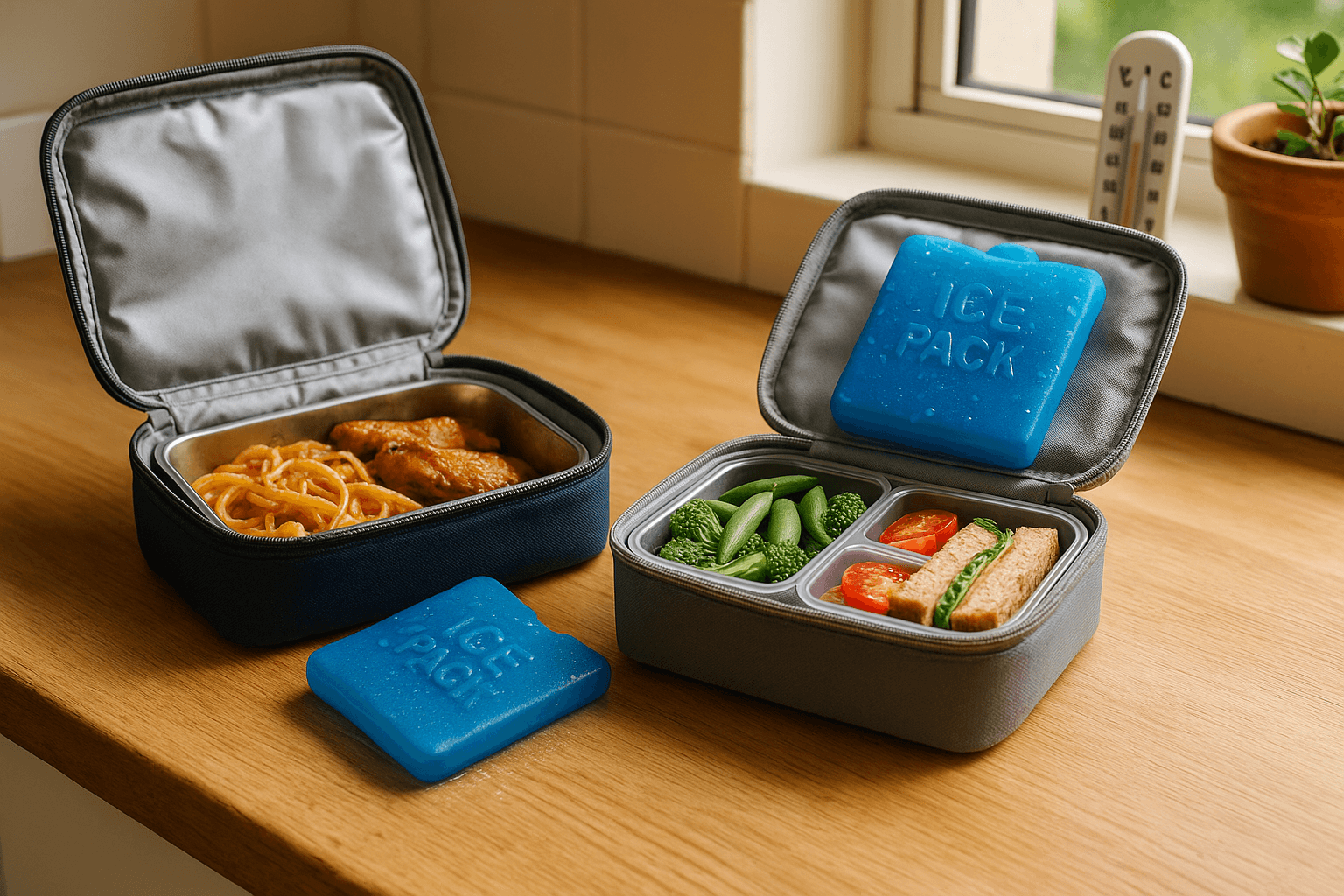
Standard thin ice packs melt completely in 2-3 hours when temperatures hit 30°C+. In Australian conditions, you need gel-based reusable packs that maintain cold for 4+ hours when paired with an insulated bag.
4+
hours of cooling in 35°C heat with quality gel packs
Personal testing 2024
Tested with Bentgo and Fit & Fresh gel packs in insulated bags
Placement matters as much as pack quality. Position ice packs at the bottom and sides of the lunchbox, not on top of food. Cold air sinks, so bottom placement keeps the entire container cool longer.
Quality gel packs like Bentgo Reusable Ice Packs ($16 for 4-pack) or Fit & Fresh Cool Coolers last 3-5 years. Compare this to buying disposable ice daily at $0.40 per pack — the reusable packs pay for themselves in 6 weeks.
For more detailed testing results on specific ice pack brands, see our ice packs tested for Australian heat comparison.
Get 20 Lunchbox Ideas on One Page
Print-friendly cheat sheet with accessories needed for each lunch
Food containers that survive the school bag tumble
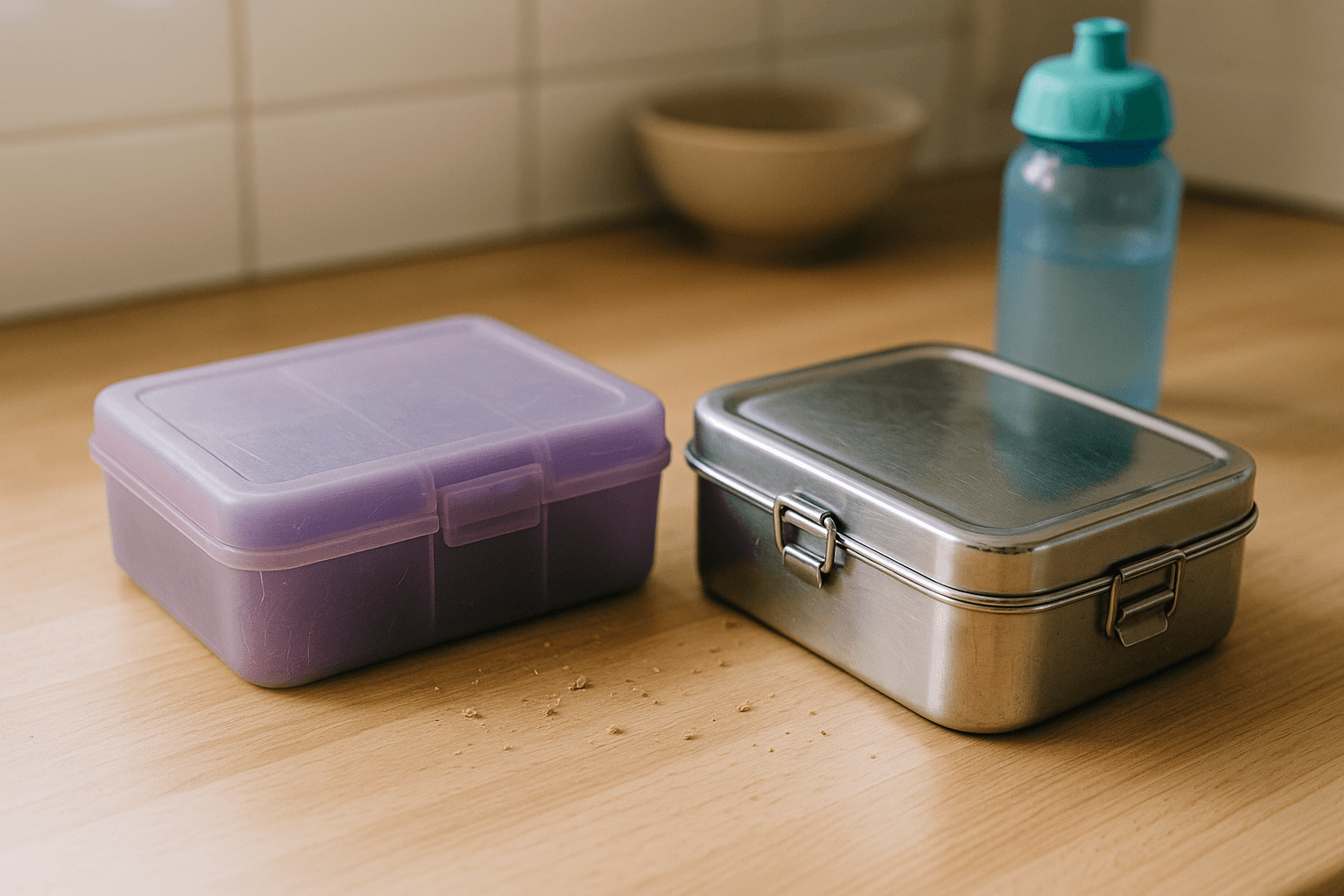
Cheap plastic containers crack or warp after 6-12 months of daily school bag pressure. Kids dump bags, throw them, sit on them — your containers need to handle this reality.
Stainless steel containers and hard-shell bento boxes survive 5+ years of daily use. The Yumbox Tapas ($55) and Bentgo Kids ($25) both have rigid shells that protect food and maintain their seal integrity over years.
Durable Container Options
Yumbox Tapas
$55
- ·7 compartments
- ·Leak-proof guarantee
- ·Dishwasher safe
- ·BPA-free
Excellent build quality
Perfect portion control
Lasts 5+ years
Higher upfront cost
Heavy when full
Best for families wanting maximum durability
Bentgo Kids
$25
- ·5 compartments
- ·Leak-resistant
- ·Stackable design
- ·Multiple colours
Good value for money
Lightweight
Easy for kids to open
Plastic can stain
Seal wears after 3 years
Solid middle-ground option
Sistema Bento
$15
- ·4 compartments
- ·Clip locks
- ·Basic dividers
- ·Budget-friendly
Very affordable
Available everywhere
Good starter option
Clips break easily
Not fully leak-proof
Shorter lifespan
Budget choice but expect replacements
Compartmentalised containers reduce the need for multiple small containers, cutting down on pieces to lose and wash. They also naturally control portions — preventing the "packed too much, ate too little" waste cycle.
Investment upfront ($25-55 per lunchbox) saves money on replacements and eliminates disposable packaging costs. Over a 5-year primary school period, quality containers cost $0.04 per school day vs $0.15 daily for disposable alternatives.
Replacement parts that extend lunchbox life
Silicone seals and dividers wear out faster than the lunchbox shell itself. Instead of replacing the entire unit, replacement parts cost 60-70% less and extend life by 2-3 years.
Brands like Yumbox and Bentgo sell individual dividers, lids and gaskets separately for $5-15. A $10 replacement seal extends a $50 lunchbox's life significantly — excellent value compared to buying new.
Before Buying: Check Replacement Parts Availability
Budget brands rarely offer replacement parts. When the seal fails or divider cracks, you're buying a complete new lunchbox. This false economy costs more over multiple school years.
Check parts availability before purchasing. Some popular brands have 6-month waits for Australian replacement part orders, making the warranty practically useless.
Accessories for Australian school allergy policies
Nut-free school policies require separate containers or dedicated dividers to prevent cross-contamination. Standard dividers aren't enough — you need clearly marked, dedicated zones.
Colour-coded dividers help identify allergen-free areas at a glance. Teachers and carers can visually confirm contents meet school restrictions without detailed inspection.
Allergy policy compliance
Many Australian schools require visual confirmation that lunches meet allergy restrictions. Transparent containers and clear labelling prevent lunchtime delays.
Dedicated utensils (stainless steel fork/spoon sets with cases, $8-15) prevent mixing allergens during lunch prep and eating. Kids often share utensils — having their own set eliminates this risk.
Insulated containers keep allergen-safe foods at safe temperatures longer. Cross-contamination risk increases when food sits in the temperature danger zone (5-60°C) for extended periods.
For comprehensive guidance on managing school allergy policies, see our allergen-free school lunch guide.
Water bottles: the overlooked lunchbox accessory
Leaking drink bottles ruin entire lunches and waste money. A quality leak-proof water bottle prevents soggy sandwiches and eliminates the need for emergency canteen purchases.
Insulated bottles keep water cool in Australian heat, encouraging kids to drink more. Dehydrated kids eat less and concentrate poorly — proper hydration supports both health and learning.
Reusable bottles eliminate $2-3 daily spending on single-use bottled water — saving $500+ per school year.
Stainless steel bottles like Frank Green Ceramic Reusable ($35) and CamelBak eddy+ Kids ($25) survive playground drops that crack plastic bottles. They last entire primary school years without replacement.
Durable bottles handle the reality of school life: dropped from climbing equipment, kicked around playgrounds, forgotten in hot cars. Cheap bottles crack, lose seals or develop leaks within months.
When accessories aren't worth the money
Single-function gadgets like egg holders, sandwich cutters and themed dividers rarely justify their cost for daily use. They solve problems that don't exist or create more washing for minimal benefit.
Novelty character lunchboxes cost 40% more than plain versions for identical functionality. Kids outgrow character preferences faster than lunchboxes wear out — you're paying premium prices for temporary appeal.
Budget-friendly basics like Sistema (~$15) meet most needs. Premium brands aren't necessary unless you're prioritising maximum durability over multiple children.
Trendy accessories that don't address food safety, durability or waste prevention are marketing distractions. Focus spending on accessories that solve real problems: keeping food safe, preventing waste, surviving daily use.
Accessories for occasional use (themed lunch trays for parties, special event containers) are better borrowed or rented. Daily-use items justify the investment — occasional-use items don't.
Cost-per-use: accessories vs single-use alternatives over 5 years
The mathematics of reusable vs disposable accessories strongly favours quality upfront investment for families packing lunch daily.
5-Year Cost Comparison: Reusable vs Disposable
Reusable ice packs: $16 ÷ (250 school days × 5 years) = $0.013 per day vs $0.40 daily for disposable ice. Annual saving: $97 per child.
Quality lunchbox: $50 ÷ 1,250 school days = $0.04 per day vs $0.15 daily for disposable containers. Annual saving: $28 per child.
Insulated lunch bags ($40) cost $0.032 per day and prevent food waste worth $50+ annually. The accessories pay for themselves through reduced waste alone.
Total annual savings with quality accessories: $400-600 per child per year. For families with multiple children, the savings compound significantly.
The accessories checklist: what every parent actually needs
Start with these four essentials and add others only if they solve specific problems your family faces:
Essential Lunchbox Accessories Setup
Quality lunchbox
Compartmentalised, leak-proof, durable. Budget $25-55 depending on expected lifespan needs.
2-4 reusable ice packs
Gel-based packs sized for your lunchbox. Essential for Australian climate conditions.
Silicone dividers or bento cups
Prevent food mixing and sogginess. Choose based on your lunchbox's compartment sizes.
Leak-proof water bottle
Insulated stainless steel. Size appropriate for your child's age and daily water needs.
Optional additions: thermos jars for hot lunches if your child eats warm foods, dedicated allergen-safe containers if required by school policy, replacement parts for extending lunchbox life.
Skip: character-themed accessories, single-use gadgets, trendy add-ons without clear function. Focus spending on accessories that address food safety, prevent waste and survive daily school use.
The right accessories transform lunchbox packing from daily stress into efficient routine — while saving hundreds of dollars annually on disposables and food waste.
How useful was this?
Get 20 Lunchbox Ideas + Accessories Needed
Print-friendly cheat sheet shows which accessories work with each lunch type
Written by Pat
Dad of two, Melbourne. Half Chinese, raised on incredible food. I make quick school lunches and test every piece of gear before recommending it. No bento art — just real food made with love.