In this article
Australian families spend $4.48 per day per child on lunchboxes, according to a 2024 Flinders University study of 1,026 NSW families. That's $25 per week per child — but this cost per lunchbox breakdown shows exactly where your money goes and how to cut it without compromising nutrition.
With 90% of Australian school children bringing home-packed lunches and one in three students now arriving at school without lunch (up 24% year-on-year), understanding your lunchbox costs has never been more important.
The real cost per lunchbox breakdown: $4.48 daily average
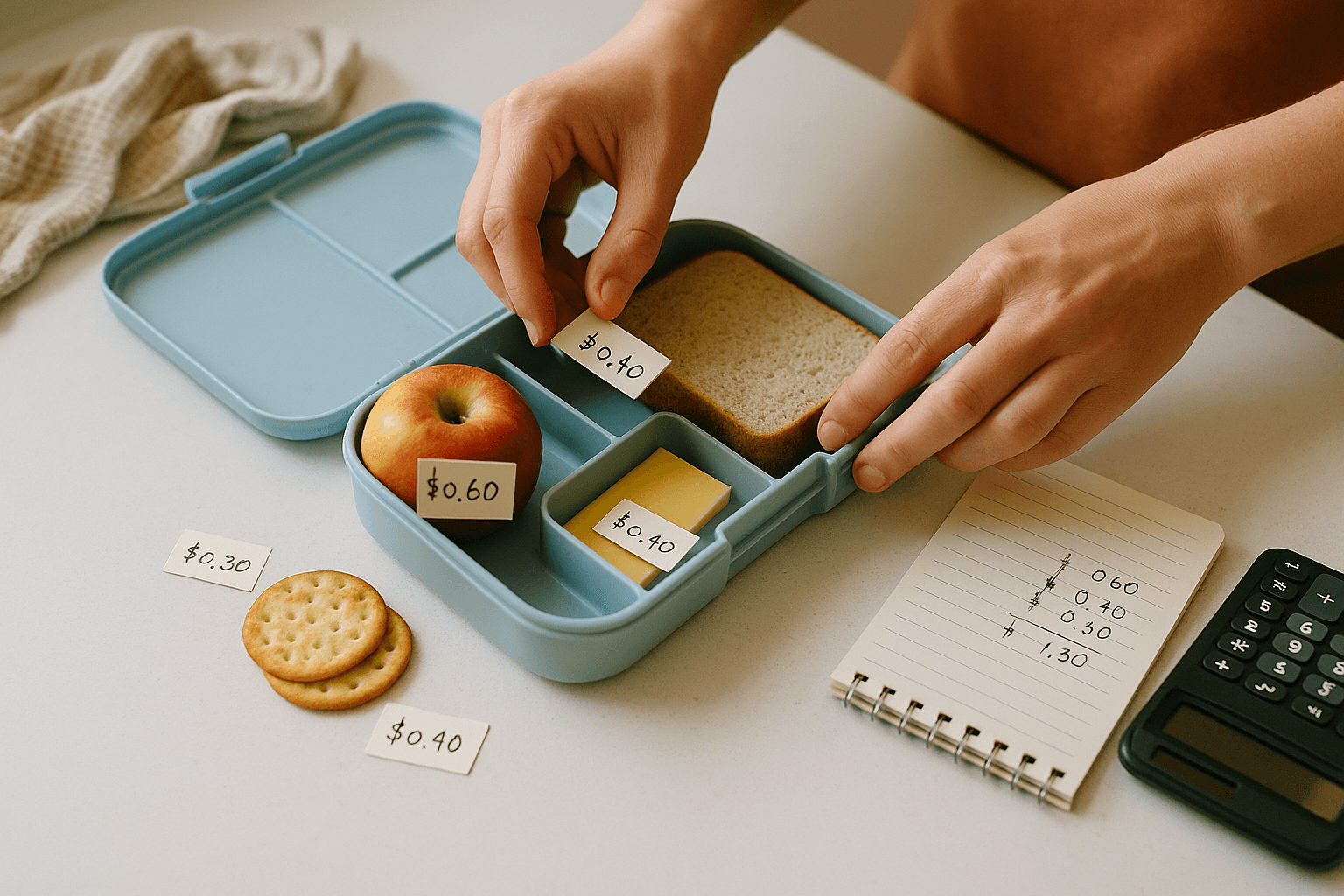
The $4.48 daily average breaks down into five main components that drive your weekly grocery spend. Protein components (cheese, ham, tuna) typically cost $1.20–$1.80 per serve, making them the highest single expense in most lunchboxes.
$25
weekly spend per child
Flinders University 2024
average across 1,026 NSW families
Bread and carbohydrates contribute $0.40–$0.70 per serve, while fresh fruit and vegetables add $0.60–$1.20 depending on seasonal availability. The variation in weekly costs comes down to shopping choices — families using mostly packaged snacks can hit $35+ per week, while those batch-cooking and buying seasonal produce stay closer to $20.
Regional differences also impact costs. Metro families typically spend 10–15% more than regional households due to higher supermarket pricing and greater access to premium convenience items.
Item-by-item analysis: where your lunchbox dollars actually go
Breaking down each lunchbox component reveals which items drive up your daily spend. Protein remains the biggest cost driver, but the gap between expensive and budget options is significant.
Protein components ($1.20–$1.80 per serve):
- Sliced cheese: $0.80–$1.20 per serve (25g)
- Ham or turkey: $1.40–$1.80 per serve (30g)
- Canned tuna: $0.70–$1.00 per serve (40g)
- Hard-boiled eggs: $0.50–$0.70 per serve (1 egg)
Snacks and extras ($0.80–$1.50 per serve):
- Individual yoghurt tubs: $1.00–$1.50 each
- Muesli bars: $0.80–$1.20 each
- Crackers (individual packs): $1.00–$1.40 each
- Fruit pouches: $1.20–$1.80 each
Cost-cutting insight
Packaged snacks drive costs up 40–60% compared to homemade alternatives. A DIY fruit and nut mix costs $1.20 per serve versus $2.00 for packaged snack packs.
Fresh produce costs vary dramatically by season. Apples and bananas remain relatively stable at $0.50–$0.80 per piece, while berries can swing from $1.50 per serve in summer to $3.00+ in winter.
Supermarket showdown: Aldi vs Coles vs Woolworths for lunchbox shopping
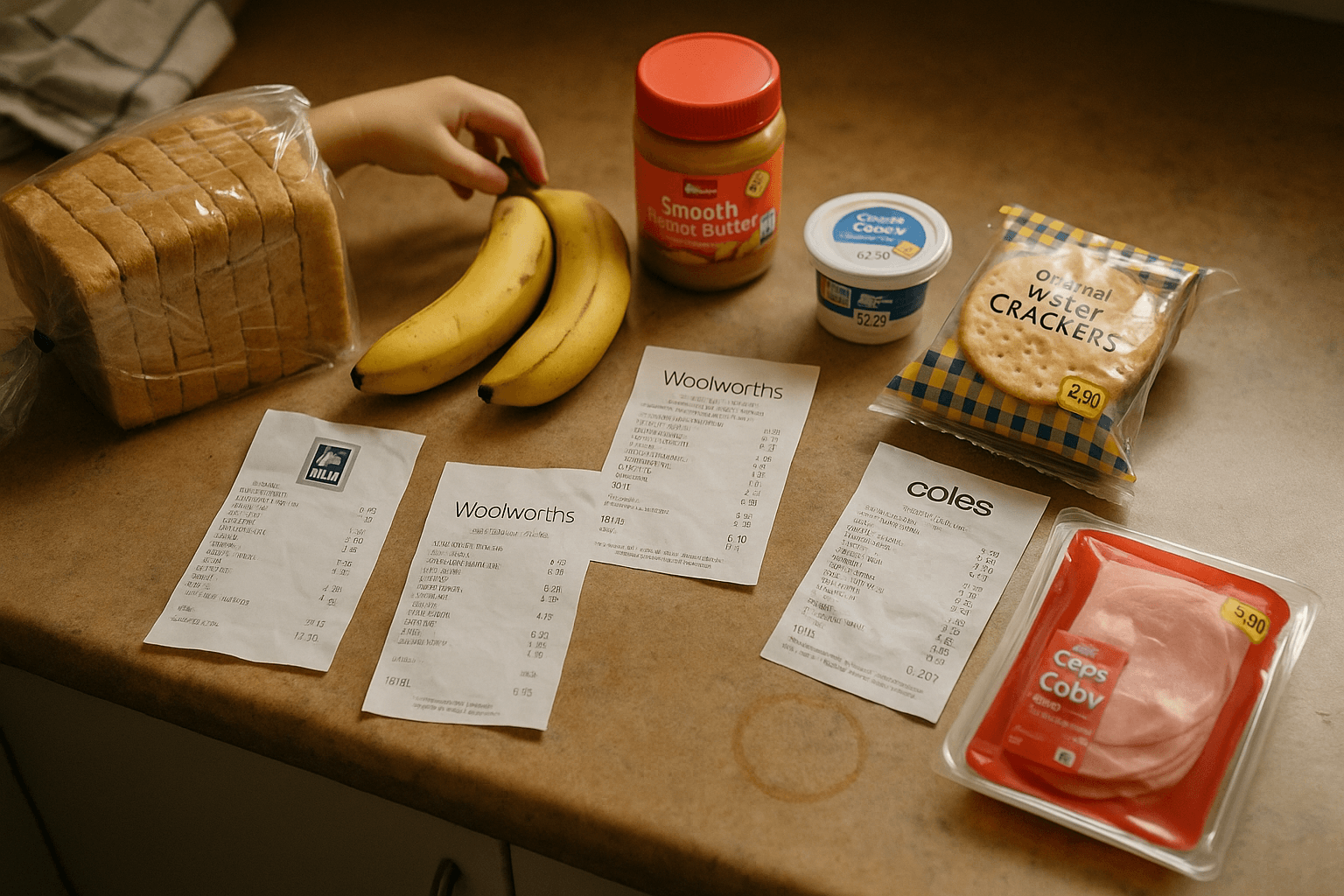
CHOICE's 2026 analysis of 17 lunchbox staples shows significant price differences across supermarkets. The same basket costs $100 at IGA, $90 at Coles/Woolworths, and $75 at Aldi — a 25% saving for families who can shop strategically.
Lunchbox staples cost comparison
Aldi
$75
- ·Home brand focus
- ·Limited choice
- ·Bulk sizing
16-25% cheaper on staples
Quality home brand items
Bulk pack savings
Limited product range
No major brands
Inconsistent stock
Best for budget-focused families
Coles/Woolworths
$90
- ·Wide selection
- ·Home brand + premium
- ·Consistent availability
Extensive product range
Convenient locations
Regular specials
Premium pricing
Brand markup
Impulse buy layout
Good for variety and convenience
IGA
$100
- ·Local convenience
- ·Premium brands
- ·Smaller pack sizes
Convenient locations
Local supplier focus
Personal service
Highest pricing
Limited home brand
Smaller pack sizes
Most expensive option
Home-brand products at all supermarkets cut 15–20% off branded equivalents with identical nutritional profiles. Aldi's home brand cheese, bread and yoghurt consistently outperform major supermarket pricing while maintaining quality.
Bulk buying at warehouse stores like Costco reduces per-serve costs significantly but requires freezer space and upfront investment. A 2kg block of cheese costs $16 at Costco versus $24 for equivalent smaller blocks at Coles.
Hidden lunchbox costs you're probably missing
Beyond the daily food costs, several hidden expenses add $200–$400 annually to your lunchbox budget. Quality lunchboxes and containers represent the biggest upfront investment but reduce ongoing packaging costs.
Equipment and replacement costs:
- Insulated lunch bags: $30–$60 upfront, $10–$20 annual replacement
- Reusable containers: $15–$55 per lunchbox set
- Ice packs and cooling: $12–$40 per year for replacements
- Food storage for batch prep: $30–$100 initial investment
Get 20 Budget Lunch Ideas
Print-ready cheat sheet with cost per serve breakdown
Time costs represent another hidden expense. The average parent spends 30 minutes daily on lunch preparation across 5 days — that's 2.5 hours weekly. At minimum wage rates, this represents $50+ in labour value per week.
Food spoilage and waste account for 10–15% of packed lunches according to Flinders University research. Uneaten sandwiches, bruised fruit and expired yoghurts add $2–$4 weekly to your actual cost per lunchbox.
Why healthy lunchboxes often cost less than processed alternatives
Contrary to popular belief, nutritious homemade options frequently undercut processed convenience foods on a cost-per-serve basis. The key lies in bulk preparation and seasonal shopping.
Cost comparison
Processed
$2.50
Lunchables pack
Homemade
$0.80
Cheese, crackers, ham
Homemade vs store-bought breakdown:
- Mini muffins: $0.60 per serve (homemade) vs $1.80 (store-bought)
- Fruit and nut mix: $1.20 per serve vs $2.00 for packaged versions
- Cheese and crackers: $0.80 per serve vs $2.50 for Lunchables
- Fresh fruit: $0.50–$1.00 vs $0.70–$1.50 for juice boxes (better nutrition)
Batch-cooking on weekends amplifies these savings. A Sunday session making frittata cups, energy balls and veggie muffins provides 3–4 days of protein and snacks for $8–$12 total — equivalent to 2–3 individual packaged snacks.
Seasonal produce shopping cuts fruit and vegetable costs by 30–40%. Summer stone fruit, winter citrus and year-round apples provide consistent nutrition at budget-friendly prices.
Weekly meal planning strategy to slash your per-serve costs
Planning 5 days of lunches around 2–3 protein bases eliminates waste and reduces decision fatigue. This assembly-line approach cuts preparation time and ensures consistent per-serve costs.
Sunday meal prep system
Choose 2 proteins
Rotisserie chicken, canned tuna, or batch-cooked patties
Prep vegetables
Wash, chop and portion for 3–4 days maximum freshness
Batch cook 2 recipes
Muffins, frittatas or energy balls for variety
Portion and store
Use quality containers to maintain freshness
Buy seasonal produce to save 30–40% on fruit and vegetables. January stone fruit, April apples and July citrus provide year-round variety at peak value pricing. Track your weekly spend to identify cost creep and adjust the following week.
Mix budget staples (bread, cheese, seasonal fruit) with 1–2 'special' items per week. This maintains excitement while controlling costs — think homemade sushi rolls one day, regular sandwiches the other four.
For more structured budget planning, check out our detailed $30 lunchbox shopping list that feeds one child for a full school week.
Practical cost-cutting actions you can implement this week
Small changes compound into significant weekly savings. Focus on one or two changes initially rather than overhauling your entire system.
Immediate actions:
- Choose home-brand products for staples (bread, cheese, yoghurt)
- Buy versatile proteins in bulk and freeze portions
- Replace individual snack packs with bulk portions
- Shop Aldi for core items, regular supermarket for specific needs
This weekend:
- Invest in quality containers to reduce packaging waste
- Batch cook one recipe for 3–4 days of variety
- Compare cost-per-100g pricing, not just shelf prices
- Plan next week's lunches around current specials
Track your actual spend for 2 weeks to establish a baseline, then implement one cost-cutting strategy and measure the difference.
Grow herbs in pots for fresh flavour at $0.10 per serve versus $1.50 for store-bought herbs. Basil, parsley and chives transform basic sandwiches into appealing meals without budget blow-out.
Benchmarking your family spend: is $4.48 realistic?
The national average of $4.48 per day represents a middle ground between convenience and cost-consciousness. Your actual spend depends on family size, dietary requirements and shopping strategies.
Factors affecting your costs:
- Dual-income households often spend $5–$7 daily due to time constraints
- Single-income families average $3–$4 with more preparation time
- Dietary restrictions (allergies, vegan) typically add 20–30%
- Family size impacts bulk-buying economics — savings increase with 2+ children
Regional variation shows metro areas running 10–15% higher than regional Australia due to supermarket pricing and premium product availability.
To establish your baseline, track every lunchbox item for 3 days and calculate the total cost. Most families discover they're spending $6–$8 daily without realising it — packaged snacks and convenience items add up quickly.
Lunchbox cost FAQ
Action plan: cut your lunchbox costs starting tomorrow
Implement these changes gradually over 2 weeks to avoid overwhelming your routine. Start with the highest-impact, lowest-effort changes first.
Week 1 priorities:
- Audit current spend by tracking 3 days of actual costs
- Visit Aldi or focus on home-brand sections at your regular supermarket
- Reduce individual snack packs by 50%
- Plan one batch-cooking session for the weekend
Week 2 implementation:
- Calculate your new weekly cost and compare to baseline
- Invest in quality storage containers if needed
- Try 2–3 new homemade snack recipes
- Adjust portions and variety based on what worked
For specific recipe inspiration that won't break your budget, explore our guide to cheap lunchbox ideas that don't look cheap.
Remember that small, consistent changes create lasting savings. A $1 daily reduction per child saves $200+ annually — money that stays in your family budget rather than disappearing into lunchbox costs.
How useful was this?
Get My Budget Lunch Cheat Sheet
20 cost-effective ideas with price breakdowns. Print it, stick it on your fridge.
Written by Pat
Dad of two, Melbourne. Half Chinese, raised on incredible food. I make quick school lunches and test every piece of gear before recommending it. No bento art — just real food made with love.