In this article
DIY lunchbox snack mixes cost $1.35–$1.95 to make at home compared to $4.50–$6.50 for store-bought equivalents — that's $2.90–$4.90 saved per snack. With Australian families packing approximately 200 lunchboxes per year, homemade snack mixes can save $580–$980 annually per child. These 10 recipes use Coles and Woolworths ingredients to create nut-free, portion-controlled snacks that stay fresh in Australian heat.
$580-980
Annual savings per child
Based on 200 lunchboxes yearly
Switching from store-bought to DIY snack mixes
Why homemade snack mixes beat store-bought (and save $3+ per box)
Store-bought snack mixes like Uncle Tobys Fruit & Nut Mix or Fantastic Delites cost $4.50–$6.50 per 150g box at major Australian supermarkets. Homemade equivalents using the same ingredient types cost $1.35–$1.95 for identical portions. The savings come from buying base ingredients in bulk rather than paying for packaging, marketing and brand premiums.
According to Australian school lunch cost research, parents spend approximately $25 per week on lunchbox items. Snack foods represent the highest markup category — switching just the snack component to homemade versions can reduce weekly costs by $8–12 without compromising nutrition or variety.
Ingredient control addresses two major parent concerns: nut-free school policies and hidden sugar content. Commercial snack mixes often contain 12–18g sugar per serve and carry "may contain nuts" warnings. Homemade versions let you substitute seeds for nuts and control sweetener amounts.
Weekly snack costs
Store-bought
$22.50
5 days × $4.50 per snack
DIY mixes
$8.75
5 days × $1.75 average cost
The $2 formula: building cost-effective snack mixes
Every budget snack mix follows the same cost structure: 40% base ingredients, 30% dried fruit, 20% protein add-ins, and 10% flavouring. This formula keeps individual servings under $2 while maintaining nutritional balance and kid appeal.
Base ingredients (40% of cost) provide bulk and crunch. Coles homebrand Honey Oats cost $2.10 per 500g ($0.42 per 100g), making them cheaper than branded cereals at $0.80+ per 100g. Rice crackers, plain cornflakes and rolled oats offer similar value and shelf stability.
Dried fruit (30% of cost) adds natural sweetness without refined sugar. Sultanas at $1.80 per 200g provide better value than exotic dried fruits. Check clearance bins for discounted dried cranberries, banana chips and apple pieces — these can drop to half-price when approaching best-before dates.
Protein add-ins (20% of cost) include sunflower seeds ($1.50 per 100g), pumpkin seeds ($3.00 per 100g) and coconut flakes ($2.40 per 100g). Sunflower seeds offer the best protein-to-cost ratio for nut-free requirements.
Clearance shopping strategy
Visit the health food aisle clearance section on weekends — dried fruits and nuts/seeds get marked down 30-50% when within 6 weeks of expiry. These ingredients stay fresh for months when stored properly.
10 DIY lunchbox snack mixes under $2 each
Each recipe makes 5 child-sized portions (1/3 cup each for ages 4–7, 1/2 cup for ages 8–12). Prep time averages 5 minutes per recipe with no cooking required.
Recipe 1: Honey Oat Crunch — $1.85
Prep time: 3 min | Serves: 5
- 2 cups Coles Honey Oats ($0.84)
- 1/2 cup sunflower seeds ($0.75)
- 1 tsp cinnamon ($0.10)
- 2 tbsp honey ($0.16)
Mix dry ingredients, drizzle honey, toss until coated. Store in airtight container.
Recipe 2: Tropical Coconut Mix — $1.72
Prep time: 2 min | Serves: 5
- 1.5 cups rice crackers, broken ($0.72)
- 1/2 cup coconut flakes ($0.60)
- 1/3 cup dried mango pieces ($0.25)
- 1/4 cup pumpkin seeds ($0.15)
Combine all ingredients. No additional preparation needed.
Recipe 3: Apple Cinnamon Clusters — $1.63
Prep time: 15 min | Cook time: 10 min | Serves: 5
- 3 Weet-Bix, crushed ($0.45)
- 1/2 cup apple chips, broken ($0.80)
- 2 tbsp brown sugar ($0.12)
- 1 tbsp butter, melted ($0.26)
Mix crushed Weet-Bix with brown sugar and cinnamon. Add melted butter, spread on tray, bake 10 minutes at 160°C. Cool completely, mix with apple chips.
Batch prep method
Prep dry ingredients
Measure all dry components for 3 recipes into separate bowls
Add wet ingredients
Drizzle honey, melted butter or oils as specified per recipe
Portion immediately
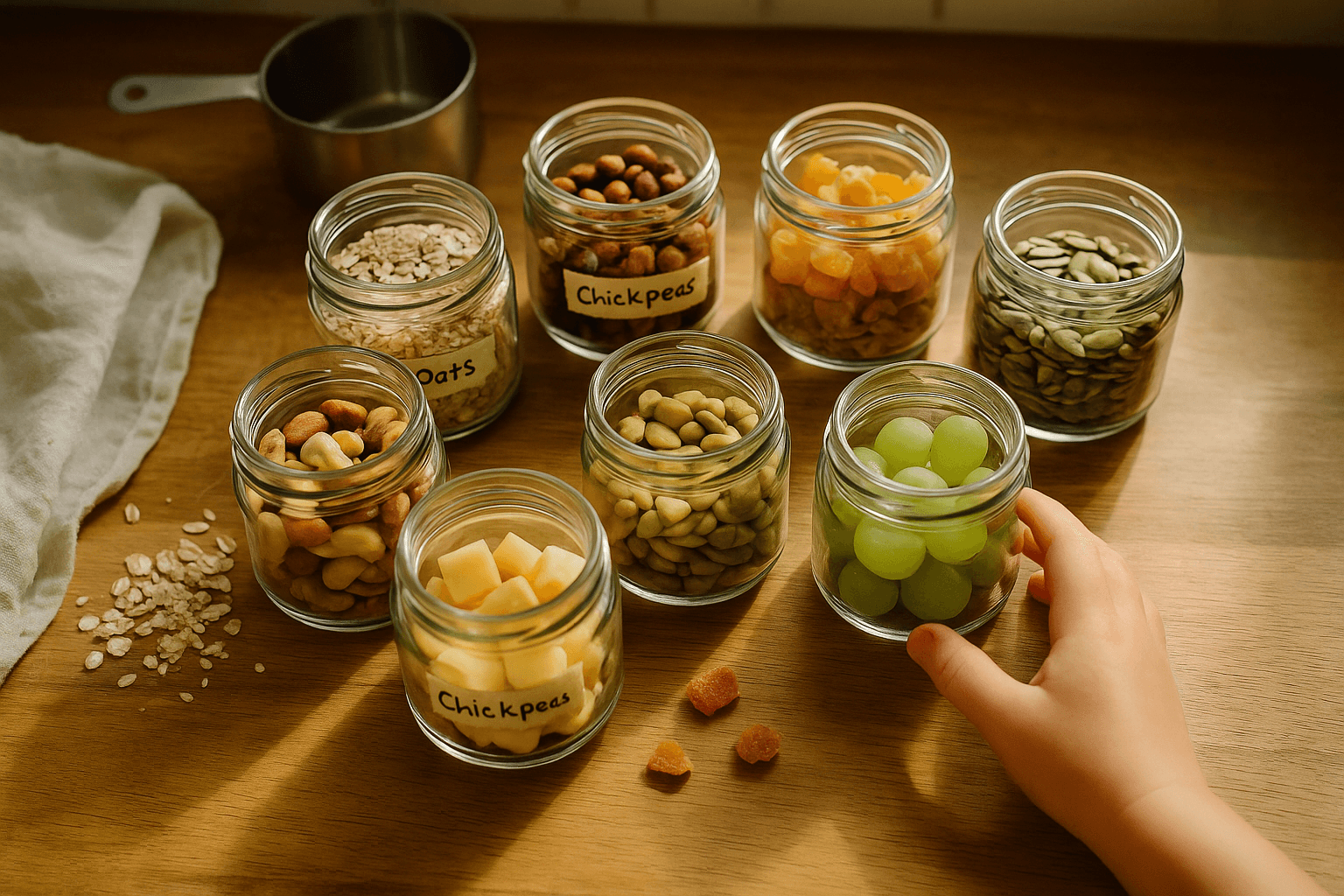
Divide into glass jars or containers while ingredients are evenly distributed
Label and date
Mark containers with contents and prep date for freshness tracking
Recipe 4: Chocolate Chip Trail Mix — $1.91
- 2 cups Coles muesli base ($0.88)
- 1/3 cup dark chocolate chips ($0.65)
- 1/3 cup sultanas ($0.30)
- 1/4 cup sunflower seeds ($0.08)
Recipe 5: Cheesy Seed Crunch — $1.58
- 2 cups rice crackers ($0.96)
- 2 tbsp cheddar powder ($0.35)
- 2 tbsp sesame seeds ($0.20)
- Pinch of salt ($0.07)
Recipe 6: Berry Blast — $1.78
- 2 cups cornflakes ($0.64)
- 1/3 cup mixed dried berries ($0.90)
- 1/4 cup coconut flakes ($0.15)
- 1 tbsp honey drizzle ($0.09)
Recipe 7: Pumpkin Spice Popcorn — $1.42
- 3 cups popped corn ($0.60)
- 1/4 cup pumpkin seeds ($0.45)
- 1 tbsp cinnamon sugar ($0.37)
Recipe 8: Banana Oat Bites — $1.35
- 1.5 cups rolled oats ($0.63)
- 1 mashed banana ($0.50)
- 1 tbsp brown sugar ($0.22)
Mix ingredients, form small clusters, bake 12 minutes at 150°C.
Recipe 9: Veggie Chip Mix — $1.89
- 1.5 cups baked veggie chips ($1.20)
- 1/4 cup sunflower seeds ($0.38)
- 1 tbsp nutritional yeast ($0.31)
Recipe 10: Maple Pecan-Free Crunch — $1.67
- 2 cups rolled oats ($0.84)
- 2 tbsp maple syrup ($0.45)
- 1/4 cup mixed seeds ($0.38)
Meal prep strategy: Sunday snack mix assembly for the week
Batch preparation takes 30 minutes on Sunday to create 10 individual portions across 2–3 different recipes. This prevents mid-week lunchbox assembly stress and ensures consistent portion sizes.
Make 2–3 recipes per prep session rather than single large batches. Kids get bored eating the same snack daily, and ingredient separation occurs in large containers over time. Rotating between Honey Oat Crunch, Tropical Coconut Mix and one seasonal recipe maintains variety.
Portion sizing depends on age and appetite. Children aged 4–7 need 1/3 cup portions (approximately 30g), while ages 8–12 require 1/2 cup portions (45g). Use measuring cups during prep to establish consistent serving sizes — this becomes automatic after 2–3 sessions.
Get 20 More Budget Lunch Ideas
Print-friendly cheat sheet with costs per serve
The assembly-line method streamlines production: measure all dry ingredients first, add wet ingredients second, portion into containers third. This prevents cross-contamination and ensures even distribution of add-ins like chocolate chips or dried fruit.
For families following a weekly lunchbox shopping strategy, dedicate one shelf in the pantry to snack mix ingredients. Group bases, fruits, seeds and seasonings together for faster Sunday assembly.
Storage and freshness in Australian heat and humidity
Airtight containers are non-negotiable for Australian conditions. Glass jars with snap lids outperform plastic containers for moisture prevention — crucial during humid summer months when ingredient oils can separate and dried fruits become sticky.
Store completed snack mixes in cool, dark cupboards away from direct sunlight. Properly stored mixes maintain freshness for 7–10 days in temperate conditions, reducing to 5–7 days during summer heat waves above 35°C.
Lunchbox packing requires additional protection during warmer months. Pack snack mixes in insulated lunch bags with ice packs to prevent oil separation in nuts/seeds and maintain crispness in cereal components. The PackIt Freezable Lunch Bag maintains internal temperatures 8–10°C below ambient for 4+ hours.
Avoid high-moisture ingredients like fresh fruit in snack mixes intended for storage. Fresh banana or apple pieces introduce moisture that causes staleness within 24 hours. Use dried alternatives or pack fresh fruit separately.
Humidity warning signs
Discard snack mixes showing visible moisture, clumping of dry ingredients, or off-smells. These indicate bacterial growth risk in Australian humid conditions.
Label containers with prep dates and contents. During summer months, consider making smaller batches (3 days' worth) to ensure peak freshness rather than full weekly batches.
Nut-free snack mixes: meeting Australian school allergy policies
Australian schools maintain strict nut-free policies due to severe allergy prevalence. Seed substitution provides equivalent protein and healthy fats without triggering school restrictions. Sunflower seeds cost $1.50 per 100g compared to almonds at $3.20 per 100g, offering both safety and budget benefits.
Replace tree nuts with sunflower seeds, pumpkin seeds (pepitas), sesame seeds or hemp seeds. These provide similar nutritional profiles — sunflower seeds contain 20g protein per 100g, matching almonds' protein content.
Cross-contamination prevention requires dedicated preparation tools when making nut-free batches. Use separate cutting boards, measuring cups and storage containers from any equipment used with tree nuts or peanuts. Even trace amounts can trigger severe reactions.
Protein alternatives include chickpea crisps, roasted lentils and sunflower seed butter (where schools permit spreads). Dark chocolate chips remain acceptable in most schools when sourced from nut-free facilities — check packaging for "may contain" warnings.
School communication helps prevent confusion during shared snack times or birthday celebrations. Label containers clearly with "nut-free" markers and include ingredient lists when sending snacks for class sharing.
For families navigating Australian school allergy policies, maintain separate storage areas for nut-free ingredients and consider bulk purchasing from dedicated allergen-free suppliers.
Ingredient swaps and budget hacks for under $2
Homebrand substitution delivers the biggest cost savings. Coles and Woolworths homebrand cereals, oats and dried fruits cost 40–60% less than premium brands with identical nutritional profiles. Coles Rolled Oats at $1.30 per kg versus Uncle Tobys at $3.20 per kg provides identical fibre and protein content.
Source dried fruit from bulk bins at markets, Aldi or independent grocers rather than pre-packaged supermarket options. Bulk sultanas cost $4.50 per kg versus $9.00 per kg for branded packets — a 50% saving on ingredients comprising 30% of recipe costs.
Seed hierarchy for budget-conscious families: sunflower seeds ($15 per kg) offer better value than pumpkin seeds ($30 per kg) or hemp seeds ($45 per kg). Nutritionally, sunflower seeds provide comparable protein and healthy fats.
Make popcorn from bulk corn kernels rather than buying pre-popped varieties. Bulk popping corn costs $0.80 per kg and yields 8–10 cups popped corn, compared to pre-popped at $8–12 per kg equivalent.
Homebrand oats
$1.30/kg
- ·Same nutrition as premium
- ·Bulk packaging
- ·Long shelf life
Significant cost saving
Available at all major supermarkets
Less appealing packaging
Best value base ingredient
Branded cereals
$3.20/kg
- ·Premium branding
- ·Smaller packaging
- ·Marketing costs included
Familiar taste
Child brand recognition
140% price premium
Same nutritional value
Unnecessary expense for snack mixes
Clearance timing at major supermarkets follows predictable patterns. Health food aisles get marked down Wednesday–Friday afternoons when stock rotates. Dried fruits, nuts and seeds within 6 weeks of expiry receive 30–50% discounts while maintaining months of actual shelf life.
Troubleshooting: when snack mixes go wrong
Sogginess results from humidity exposure during storage or preparation. Australian coastal areas require extra moisture protection — include food-grade silica gel packets in storage containers during summer months. Ensure containers are completely dry before filling.
Oil separation occurs when high-fat seeds and nuts reach temperatures above 25°C. Mix ingredients fresh each time rather than pre-mixing oil-heavy components. Store base ingredients separately and combine just before packing lunchboxes during hot weather.
Child rejection often stems from unfamiliar textures or flavours. Start with 70% familiar ingredients (cereals they already eat) and 30% new additions. Gradually increase new ingredient ratios over 2–3 weeks as acceptance develops.
Ingredient settling happens in large batches where heavy items (seeds, chocolate chips) sink to the bottom. Pre-portion into individual containers immediately after mixing to ensure even distribution across all servings.
Staleness indicates moisture exposure or extended storage. Snack mixes lose crispness after 7–10 days in optimal conditions, reducing to 5 days during humid weather. Make smaller batches more frequently rather than large weekly batches.
Freshness test
Taste-test stored snack mixes before packing. Stale or rancid flavours develop gradually — what seems fine to adults may be immediately rejected by sensitive child palates.
Packing snack mixes into lunchboxes: portion and placement tips
Container selection prevents mixing with other lunchbox items and maintains freshness. Small glass jars (250ml) or paper bags work better than plastic containers which can trap moisture and create condensation.
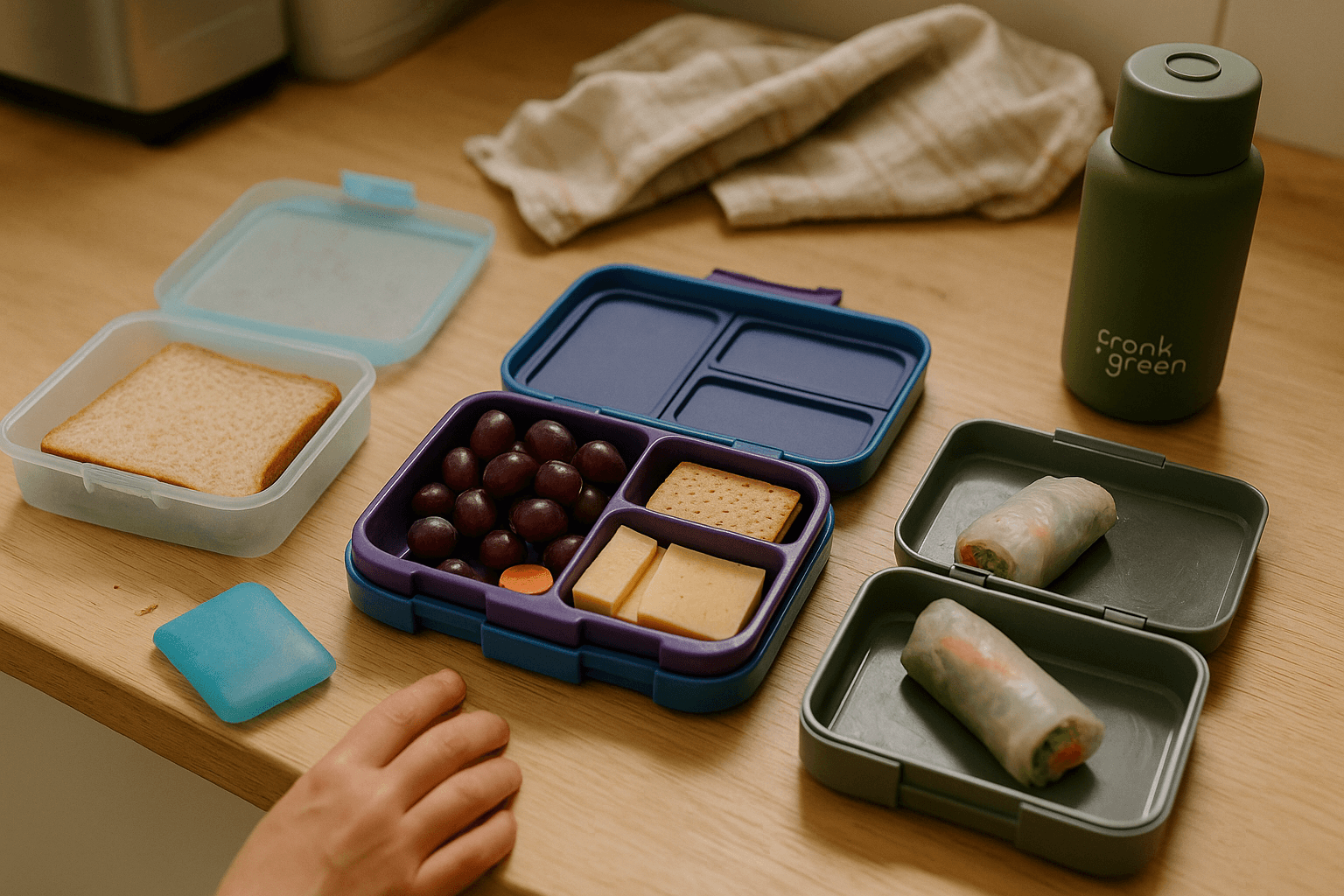
Place snack mixes in separate compartments of bento-style boxes like the Yumbox Original or Bentgo Kids Lunch Box. This prevents flavour transfer and keeps crispy ingredients away from moisture-producing items like cut fruit.
Utensil inclusion helps younger children (4–7 years) eat snack mixes without creating mess or spreading crumbs throughout the lunchbox. Include small spoons or forks, particularly for mixes containing chocolate chips or sticky dried fruit.
For age-appropriate portions, pre-measure into individual containers rather than giving children large amounts to self-regulate. Ages 4–7 require 1/3 cup servings, ages 8–12 need 1/2 cup portions. This prevents overeating and ensures snacks complement rather than replace main lunch items.
Placement strategy within lunchboxes affects freshness. Pack snack mixes last (on top of cold items) to minimise heat exposure during transport. Keep away from ice packs which can cause condensation and sogginess.
The Sistema Bento Lunch Box provides dedicated snack compartments with tight-fitting lids that maintain separation and freshness better than single-compartment containers.
Cost breakdown: real examples from Australian supermarkets
Honey Oat Crunch detailed costs (February 2024 Coles pricing):
- Coles Honey Oats 500g: $2.10 (need 200g = $0.84)
- Sunflower seeds 100g: $1.50 (need 50g = $0.75)
- Ground cinnamon 35g: $2.20 (need 5g = $0.31)
- Honey 375g: $3.20 (need 30ml = $0.26)
- Total cost: $2.16 for 5 servings = $0.43 per serve
Store-bought equivalent: Uncle Tobys Fruit & Nut Mix 175g = $5.50 (5 × 35g servings = $1.10 per serve) Savings: $0.67 per serve, $3.35 per batch
Annual savings calculation
$134
Per year saved
Single snack type replacement
$670
Five-child family
Total household savings
67%
Cost reduction
vs store-bought equivalent
Source: Based on 200 school days
Tropical Coconut Mix breakdown:
- Rice crackers 250g: $1.80 (need 150g = $1.08)
- Coconut flakes 250g: $3.00 (need 50g = $0.60)
- Dried mango 150g: $2.50 (need 40g = $0.67)
- Pumpkin seeds 125g: $3.75 (need 25g = $0.75)
- Total: $3.10 for 5 servings = $0.62 per serve
Compared to premium trail mixes at $1.80–$2.20 per equivalent serving, homemade versions deliver $1.18–$1.58 savings per snack.
Quick reference: best ingredients for shelf life and value
Longest shelf life ingredients (6+ months when stored properly):
- Rolled oats, rice crackers, coconut flakes
- Sunflower seeds, pumpkin seeds, sesame seeds
- Dried fruit without added oils (sultanas, cranberries)
- Dark chocolate chips, cinnamon, vanilla extract
Best value ingredients (under $0.50 per 100g):
- Coles/Woolworths homebrand oats: $0.26 per 100g
- Rice crackers (bulk): $0.36 per 100g
- Sunflower seeds: $0.38 per 100g
- Ground cinnamon: $0.41 per 100g
Avoid for storage: Fresh fruit, nut butters, honey-coated items (separate in heat), anything with added oil that can go rancid.
Bulk buying strategy: Purchase dried fruit, seeds and cereals during 50% off sales. Freeze excess portions in sealed bags for up to 12 months to prevent insect contamination and rancidity.
Seasonal pricing patterns: Dried berries drop 30–40% in price during winter months. Coconut and tropical dried fruits cost less during summer. Plan recipe rotations around these cycles for maximum savings.
Common questions
How useful was this?
Get 20 More Budget Lunch Ideas on One Page
Print-friendly cheat sheet with cost breakdowns — perfect for your fridge
Written by Pat
Dad of two, Melbourne. Half Chinese, raised on incredible food. I make quick school lunches and test every piece of gear before recommending it. No bento art — just real food made with love.
This content is for general information only. Always check ingredients for allergens and consult a health professional for dietary advice. See our Terms & Conditions.