In this article
Winter lunch prep doesn't need to be complicated — kids want warm, comforting food when it's cold, and you can deliver it without fancy equipment or hours of prep. These cozy lunchbox ideas work for Australian winters, focusing on foods that stay naturally warm and safe until lunchtime.
Why kids crave warm food in winter (and why it matters)
Kids naturally gravitate toward warm foods during colder months because it provides psychological comfort beyond just nutrition. Australian winters might be milder than overseas, but the shift from 30°C summer days to 15°C mornings still triggers that instinctive desire for warming meals.
This craving isn't just preference — it affects eating habits. Kids are more likely to eat their entire lunch when it feels seasonally appropriate. According to the University of Wollongong, more than 80% of Australian primary school lunches are of poor nutritional quality, with half of students' school-day food intake coming from junk food. Warm, appealing lunches help combat this by making healthy food more attractive than processed alternatives.
The comfort factor matters too. When kids feel satisfied and nourished by warm food, they're less likely to trade lunch items or skip eating altogether. Since children get a third of their daily food intake at school, what they actually consume during school hours significantly impacts their health and afternoon energy levels.
51%
of Australian parents want to learn more about nutrition
Public Health Nutrition 2024
to improve their children's healthy eating habits
Winter warmers without a thermos: creative solutions for Australian schools
Most Australian schools don't have microwaves, but you can keep food warm using insulation strategies that work with regular lunch gear. The key is understanding that "warm" doesn't mean "hot" — it means comfortably above room temperature and safe to eat.
Your insulated lunch bag becomes the foundation. Pack warm items in the centre, surrounded by other containers that act as insulation barriers. A quality insulated bag like the PackIt Freezable Lunch Bag maintains temperature for 4-6 hours when used strategically.
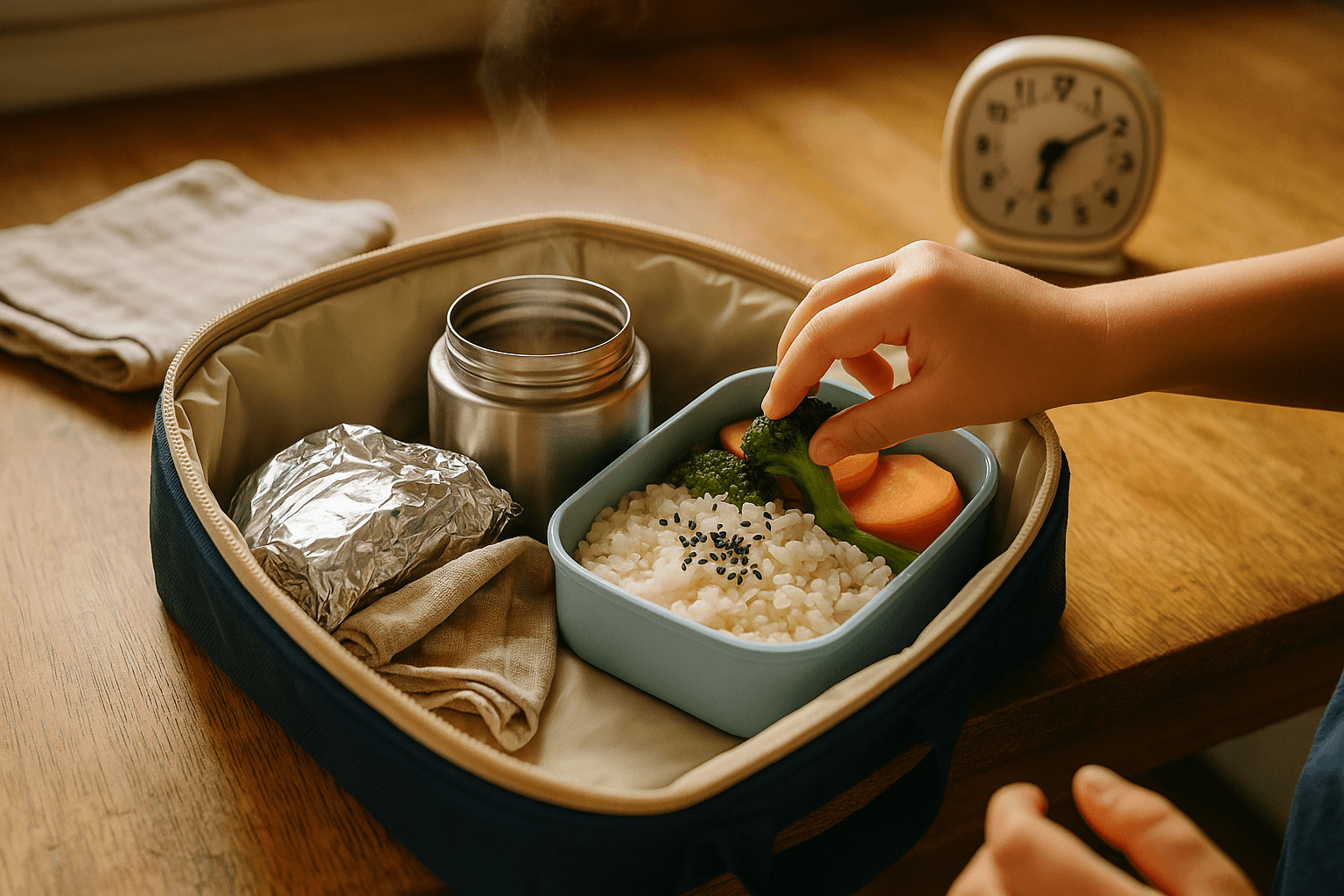
Hot food wrapping technique works surprisingly well for Australian winters. Wrap warm food in foil, then loosely in a clean tea towel before placing in your regular lunchbox. This creates a pocket of retained heat that keeps food pleasantly warm (not hot) until lunchtime.
Naturally warm-retaining foods are your secret weapon. Dense foods like rice, pasta, and protein-rich items hold heat longer than vegetables or bread. A rice bowl packed warm at 7:30am will still be comfortably above room temperature at 12:30pm.
Timing strategy matters most. Pack cold items first (fruit, crackers, water bottle), then warm items last, just before leaving for school. Every minute of heat retention counts.
Reverse ice pack strategy
Place your warm container in the centre of the lunch bag, with an ice pack on the opposite side near cold items. The insulation keeps warm food warm and cold food cold simultaneously.
15 cozy winter warmers that travel well
These warm lunch options hold their temperature naturally and appeal to kids who are tired of cold sandwiches. Each travels well in regular containers and doesn't require reheating.
Pasta and grain-based warmers
- Cheesy penne with hidden veggie sauce — pasta holds heat beautifully, cheese adds comfort appeal
- Fried rice with scrambled egg — rice grains retain warmth, protein keeps kids satisfied
- Barley risotto with chicken — dense grains stay warm longer than rice
- Mac and cheese with steamed broccoli — ultimate comfort food that travels well
Protein-rich warmers
- Mini chicken and corn frittata cups — pack warm, eat at room temperature safely
- Ham and cheese muffins — savoury muffins stay warm inside for hours
- Slow-cooker pulled chicken wraps — warm protein in soft tortillas
- Tuna and white bean patties — budget-friendly, naturally warm-retaining
Comfort soups and broths
- Minestrone with pasta shells — vegetables and beans in warm broth (use wide-mouth thermos)
- Chicken and vegetable soup — classic comfort in a food jar
- Lentil and carrot soup — budget-friendly, fills kids up
Baked goods that stay warm
- Aussie meat pie scrolls — pastry insulates filling, stays warm naturally
- Cheesy zucchini slice squares — dense texture retains heat well
- Pumpkin and chickpea patties — seasonal vegetables, budget-conscious
- Vegemite and cheese scrolls — familiar flavours in warm pastry
The best winter warmers combine dense textures (rice, pasta, eggs) with comfort flavours kids already love.
15-minute morning prep for busy Australian families
Assembly line strategy transforms hectic mornings into smooth lunch prep by doing components the night before. This works perfectly for dual-income households where every minute counts.
Sunday batch cooking sets you up for the week. Spend 1 hour cooking frittata cups, scrolls, and patties. Store in the fridge, then each morning you're just reheating and assembling — 5 minutes maximum.
Component prep strategy means cooking base ingredients separately. Cook a big batch of rice, pasta, or barley on Sunday. Cook proteins separately. Steam vegetables in advance. Morning assembly becomes mixing warm components with fresh additions.
Leftover transformation works brilliantly for warm lunches. Last night's roast chicken becomes today's chicken and rice bowl. Leftover pasta becomes warm pasta salad with added cheese and vegetables.
5-minute morning warm lunch assembly
Pre-heat thermos
Fill with boiling water while you prep other components (2 minutes)
Reheat base
Microwave pre-cooked rice, pasta, or protein until warm (1 minute)
Add fresh elements
Mix in cheese, vegetables, or sauce for flavour and nutrition (1 minute)
Pack and insulate
Transfer to thermos or wrap in foil, pack in insulated section (1 minute)
Thermos pre-heating makes the biggest difference. Fill your Thermos FUNtainer Food Jar with boiling water while you prep other items. Empty just before adding warm food — this technique adds 2-3 hours of heat retention.
Make-ahead strategies that actually save time
Batch cooking on Sunday creates 5 days of warm lunch foundations with just 1 hour of weekend prep. This strategy works because warm lunch components freeze and reheat better than complete cold lunches.
Freezer-friendly options include frittata cups, scrolls, and patties. Cook double batches, freeze half. They thaw overnight in the fridge and reheat perfectly in 60 seconds. Label containers with contents and date — you'll thank yourself on busy mornings.
Portion control using bento containers streamlines the process. Pre-portion warm components into Yumbox Original compartments Sunday night. Morning prep becomes just reheating the entire container and adding fresh fruit or crackers.
Morning prep time
Before batch prep
20 min/morning
Cooking from scratch, stressed rushing
After Sunday prep
5 min/morning
Reheat and assemble, calm mornings
Slow cooker strategy works overnight or morning. Set chicken, rice and vegetables cooking before bed — warm lunch is ready when you wake up. Or start it at 6am for lunch ready at noon (perfect for late lunch schools).
Mix-and-match flexibility prevents boredom. Cook 3 different proteins, 2 grain bases, and 4 vegetable mixes. Kids can choose combinations throughout the week, creating variety without extra work.
Safety first: keeping warm food safe until lunch
The 4-hour food safety rule applies to warm lunches — food must stay above 60°C or be consumed within 4 hours of cooking. For school lunches, this means focusing on foods that are safe at room temperature rather than maintaining high heat.
Australian winters are mild compared to extreme climates, which actually makes warm lunch safety easier. Ambient temperatures of 15-20°C mean food cools slowly and safely, rather than hitting dangerous temperature zones quickly.
Quality insulation matters more than heating equipment. A properly insulated lunch bag maintains food temperature longer than cheap containers. The PackIt Freezable Lunch Bag creates a controlled environment that slows temperature change in both directions.
Wide-mouth containers retain heat better than narrow thermoses because there's less surface area for heat loss. The Thermos FUNtainer Food Jar's wide opening also makes it easier to pack dense foods like rice and pasta.
Temperature danger zone
Food between 5°C and 60°C can develop harmful bacteria. Pack warm food above 60°C, or ensure it cools safely within 2 hours to below 5°C.
Teach kids food safety signs — if lunch smells different, looks off, or feels unusually warm after sitting all morning, don't eat it. Most kids have good instincts about food safety when we explain what to look for.
Budget-friendly winter warmers using pantry staples
Track your actual spend — Australian parents average $6 per day on lunchboxes, but homemade warm lunches cost $2-3 per serve when batch cooked. The savings add up to $15-20 per week per child.
Pantry staples create the foundation for budget-conscious warm lunches. Rice, pasta, canned beans, frozen vegetables, and eggs provide protein, carbohydrates and nutrients at minimal cost. A rice and bean bowl with frozen vegetables costs under $1.50 per serve.
Seasonal winter vegetables like pumpkin, zucchini and carrots are cheapest during winter months and perfect for warm lunch prep. A whole pumpkin provides ingredients for a week of lunches at under $3.
Cost comparison: homemade vs store-bought warm lunches
Leftover transformation provides the biggest savings. Last night's $12 roast chicken dinner becomes 3-4 warm school lunches with added rice and vegetables. The per-serve cost drops to under $2 including the additional ingredients.
Batch cooking efficiency means cost per portion decreases significantly when cooking 5+ servings. Ingredients like rice, lentils and pasta are cheapest in bulk, and the time investment is the same whether you cook 2 serves or 8.
Picky eaters: warm lunches they'll actually eat
Start with familiar comfort foods in warm versions rather than introducing new ingredients. Kids who love mac and cheese at home will accept warm mac and cheese at school more readily than unfamiliar warm foods.
Mild flavours work better than strong spices for picky eaters. Stick to kid-approved seasonings like cheese, butter, and familiar herbs. Save adventurous flavours for home dinners where you can encourage trying new things.
Texture variety helps picky eaters accept warm lunches. Combine soft warm components (rice, pasta) with familiar crunchy sides (crackers, raw carrots) in separate compartments. This prevents texture mixing while providing sensory variety.
Involving kids in warm lunch choices
Pros
Increases buy-in and reduces lunch refusal
Teaches kids about nutrition and meal planning
Reveals preferences you might not have guessed
Cons
Takes extra time on busy mornings
Kids might choose same thing repeatedly
May request foods that don't travel well
Hidden vegetables work better in warm foods than cold ones. Grated carrot and zucchini disappear into warm pasta sauce. Pureed pumpkin adds sweetness to rice dishes. Finely chopped vegetables blend into warm mince-based meals.
Gradual introduction means pairing one new warm element with familiar cold sides. A new warm rice bowl becomes less threatening when accompanied by familiar fruit, crackers, and cheese stick.
Essential gear for winter warmers (without breaking the budget)
A quality thermos isn't essential for Australian winter lunches, but when you do need one, wide-mouth food jars work better than narrow drink bottles. The Thermos FUNtainer Food Jar 290ml is sized perfectly for primary school appetites and opens wide enough for rice and pasta.
For budget-conscious families, foil wrapping plus tea towel insulation in a regular lunchbox works for Australian winter temperatures. This technique costs nothing extra and keeps food warm for 3-4 hours — sufficient for most school schedules.
Warm lunch container options
Thermos FUNtainer 290ml
$25
- ·Wide mouth
- ·4-6 hour heat retention
- ·Leak-proof
Excellent heat retention
Kid-friendly size
Durable
Higher upfront cost
Hand wash only
Best for daily warm lunches
Foil + tea towel method
$0
- ·Uses existing containers
- ·3-4 hour warmth
- ·Works in any lunchbox
No extra cost
Works with any container
Easy to implement
Less heat retention
Requires careful wrapping
Great budget option for mild winters
Insulated lunch bag only
$15-30
- ·Temperature maintenance
- ·Multiple compartments
- ·Year-round use
Versatile for all seasons
Protects all food
Good value
Moderate heat retention alone
Requires quality bag
Essential foundation, combine with other methods
Bento-style containers like the Yumbox Original create compartments that prevent condensation from warm foods affecting cold items. This separation is crucial when packing warm and cold items together safely.
Real Australian parent wins: winter warmers that actually work
Sarah from Brisbane transformed her morning routine using Sunday batch prep: "I cook frittata cups and scrolls on Sunday, then each morning is just 5 minutes of reheating and packing. My kids actually ask for their warm lunches now instead of complaining about sandwiches."
Dual-income households report the biggest time savings from make-ahead strategies. Melbourne dad James saves 30 minutes per week: "Batch cooking rice and proteins on Sunday means warm lunches happen even on chaotic mornings. The kids eat better, and I'm not stressed about nutrition."
“The leftover transformation strategy changed everything. Last night's dinner becomes today's exciting warm lunch with just 5 minutes of morning prep. My food budget dropped $20 per week.”
Lisa Chen
Mother of two · Working Mum · Sydney
Picky eater breakthroughs happen when kids have input into warm lunch choices. Adelaide mum Kate found success with choice: "I give my daughter two warm options each morning — mini frittata or cheese scroll. Having control over the choice means she actually eats lunch."
Schools without microwave access (most Australian primary schools) report that parents using insulated bags and proper packing techniques achieve better results than those relying on thermoses alone. The combination approach works better than single solutions.
Get Your Free Winter Lunch Planner
20 warm lunch ideas you can prep in 15 minutes
Warm and cold together: safe packing strategies
Container separation prevents cross-contamination and maintains different temperatures for different foods. Keep warm items in insulated containers, cold items in separate compartments with their own temperature control.
Timing strategy matters for mixed temperature lunches. Pack cold items first — they maintain temperature longer. Add warm items last, just before school departure, to maximize heat retention during transport.
Bento-style containers like the Yumbox Original excel at temperature separation because compartments prevent condensation from warm foods affecting cold items. The sealed compartments act as individual temperature zones.
Ice pack placement requires strategy when packing both warm and cold items. Position ice packs near cold compartments only, away from warm food containers. Quality insulated bags maintain this separation effectively.
Condensation prevention
Let warm food cool for 2-3 minutes before sealing containers completely. This prevents steam buildup that can make other foods soggy.
Quality insulated bags make the biggest difference for mixed-temperature packing. The PackIt Freezable Lunch Bag maintains temperature zones that keep warm food warm and cold food cold simultaneously for 4-6 hours.
Winter warmers FAQ
How useful was this?
Get Your Winter Lunch Planner Free
20 warm lunch ideas you can prep in 15 minutes—print it, use it all winter long.
Written by Pat
Dad of two, Melbourne. Half Chinese, raised on incredible food. I make quick school lunches and test every piece of gear before recommending it. No bento art — just real food made with love.