In this article
Winter mornings are hard enough without worrying whether your child's lunch will still be warm (and safe) at 1pm. Most Australian schools don't have microwaves, so your thermos becomes the only barrier between a satisfying hot lunch and lukewarm disappointment. These 15 winter lunchbox warmers are specifically chosen for their heat retention and food safety properties.
Why Hot Lunches Matter in Winter (And Why Most Parents Get It Wrong)
Warm food isn't just comfort — it's practical nutrition. Winter lunches with dense proteins and warming spices boost immune function when kids need it most. The problem? Most parents pack food that's barely warm to begin with, or choose meals that cool too quickly.
The reality is stark: 90% of Australian schools have no lunch heating facilities. Your thermos isn't just keeping food warm — it's the entire heating system. Dense proteins like chicken and beef retain heat 3-4 hours longer than light salads or sandwiches. Thick soups and pasta dishes hold temperature better than thin broths or dry grains.
For picky eaters, warm lunches trigger familiarity responses. The aroma from hot food stimulates appetite in ways that cold sandwiches simply can't match.
Food Safety First: Keeping Hot Foods Safe Until Lunch
Hot food safety follows one critical rule: food must stay above 60°C for safety, or cool completely below 5°C. There's no safe middle ground in the danger zone between these temperatures.
The 75°C Packing Rule
Food should be steaming hot (75°C+) when you pack it. If you can't hold your hand on the outside of the thermos for 10 seconds, it's hot enough.
The 4-hour food safety rule gives you a window: properly packed hot food remains safe for up to 4 hours in a quality thermos. This covers the gap from 7:30am packing to 12:30pm lunch perfectly.
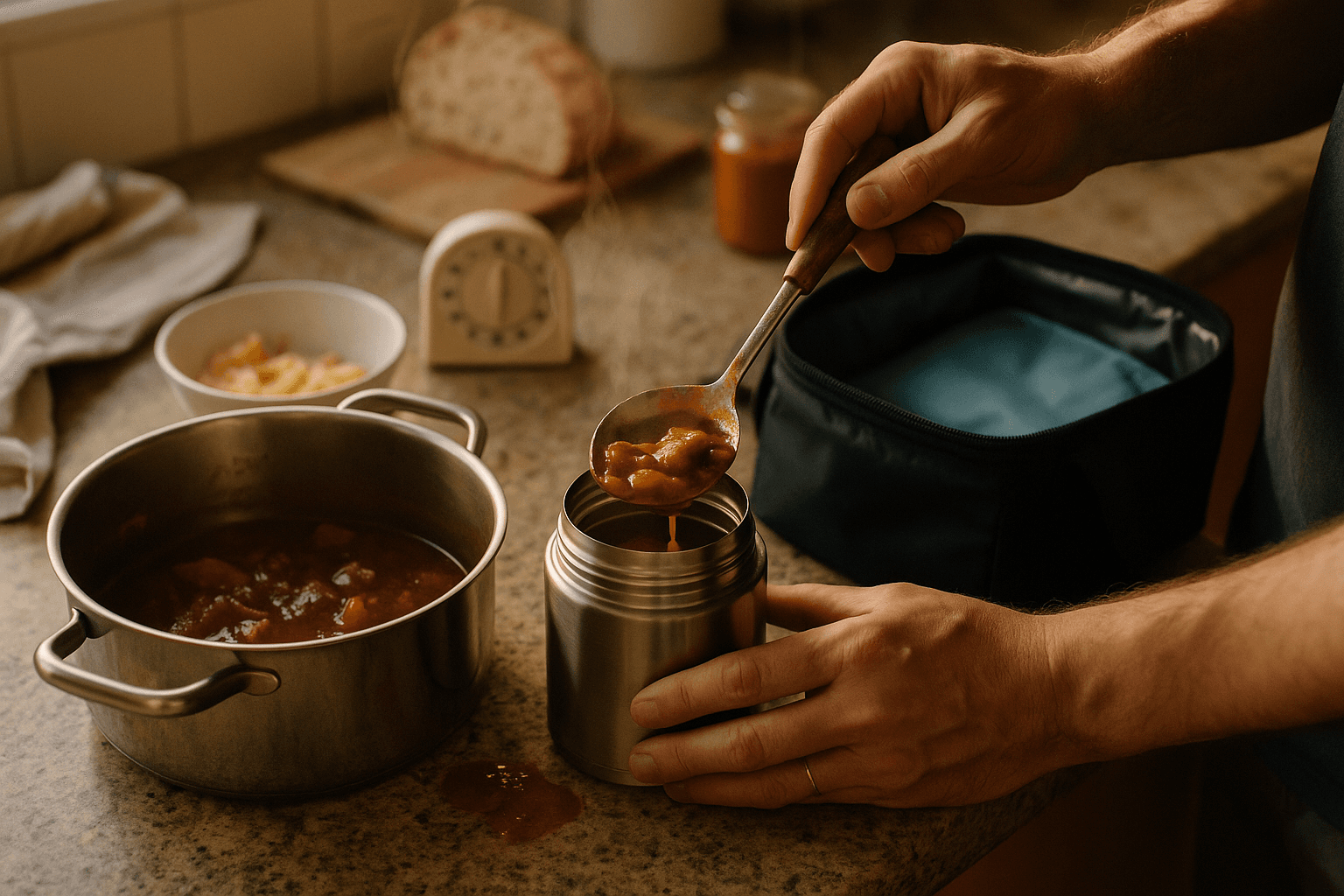
Pre-heating your thermos is non-negotiable. Fill it with boiling water 5 minutes before packing — this single step improves heat retention by 20%. The Thermos FUNtainer Food Jar 290ml holds temperature exceptionally well when pre-heated properly.
Critical mistake to avoid: never pack lukewarm food hoping it will "stay warm enough." Hot food that starts at serving temperature cools into the danger zone within 2 hours.
The 15 Winter Lunchbox Warmers That Stay Safe Until Lunch
These foods are ranked by heat retention, nutrition density, and kid appeal. Each includes realistic timing for how long they stay warm in a quality thermos.
Heat Retention Champions (3+ Hours)
Slow-Cooker Beef and Vegetable Stew
Dense proteins and thick sauce hold heat longest. Make Sunday, freeze portions.
Chicken and Lentil Soup
Protein-rich broth stays hot and provides hydration. Kids love the familiar flavours.
Lentil and Vegetable Bolognese
Plant-based protein that's hearty and freezer-friendly. Sneaks in multiple vegetables.
Mini Beef Meatballs in Tomato Sauce
Finger-food appeal with serious staying power. Make large batches and freeze.
Slow-Cooker Pulled Pork Rolls
Make-ahead winner that kids can eat with hands if needed.
Medium Heat Holders (2.5-3 Hours): 6. Mini Chicken and Corn Frittata Cups — High protein, easy to eat, naturally warming 7. Aussie Meat Pie Scrolls — Familiar comfort food that resistant eaters accept 8. Pumpkin and Chickpea Patties — Plant-based protein with seasonal vegetables 9. Tuna and White Bean Patties — Omega-3 boost in a warming format 10. Creamy Tomato Pasta with Hidden Veggies — Sauce keeps pasta warm longer than plain noodles 11. Chicken Fried Rice — Perfect for using dinner leftovers 12. Baked Sweet Potato and Black Bean Burrito — Filling and naturally sweet
Shorter Hold Times (2-2.5 Hours): 13. Ham and Cheese Muffins — Portable and familiar for cautious eaters 14. Cheesy Zucchini Slice Squares — Sneaky vegetables in a warming format 15. Vegemite and Cheese Scrolls — Australian favourite that warms naturally
Get 20 More Winter Lunch Ideas
Print-friendly cheat sheet for your fridge — never run out of warm lunch inspiration.
Essential Gear: Thermos & Insulation Tools That Actually Work
Thermos quality makes the difference between 3-hour heat retention and 90-minute disappointment. Stainless steel double-wall construction keeps food 3-4°C warmer than single-wall alternatives.
Size matters for age: 290-400ml works for 4-6 year-olds, while 500ml+ suits 7-12 year-olds. Larger thermoses hold heat longer due to better insulation ratios.
Best Thermos Options by Age
Thermos FUNtainer 290ml
$25
- ·Ages 4-6
- ·Leak-proof
- ·Easy-open lid
Perfect portion size
Excellent heat retention
Dishwasher safe
Too small for big eaters
Lid can be stiff initially
Best for younger kids
Sistema Thermos 500ml
$18
- ·Ages 7+
- ·Wide mouth
- ·BPA-free
Great value
Large capacity
Easy to fill
Shorter heat retention
Heavier when full
Budget option for older kids
Boost your thermos performance with insulated lunch bags like the PackIt Freezable Lunch Bag. These add 30-45 minutes of extra heat protection and keep the entire lunch at stable temperatures.
Morning Prep Strategies for Time-Poor Dual-Income Households
Sunday batch-cooking eliminates daily decision fatigue. Prepare 5 portions of one recipe, freeze 4, pack 1 Monday. Label containers with pack dates and rotate oldest first.
The 5-minute morning assembly: reheat frozen portions 2-3 minutes in your microwave, then pack immediately in a pre-heated thermos. Total morning time: under 5 minutes including thermos prep.
Efficient Morning Routine
Start kettle
Fill thermos with boiling water while making breakfast
Reheat food
Microwave frozen portion until steaming (2-3 minutes)
Pack thermos
Empty hot water, pack hot food immediately
Final check
Thermos too hot to hold? Perfect.
Leftover-to-lunch transformation requires zero extra cooking. Tonight's beef stir-fry becomes tomorrow's thermos lunch. This approach cuts prep time and reduces food waste significantly.
For ultra-busy mornings, try the cold-start method: pack room-temperature food with a hot water bottle beside it in the lunch bag. This adds 1-2 hours of warmth without morning reheating.
Addressing Picky Eaters: Why Warm Lunches Win
Warm food triggers comfort psychology that cold lunches can't match. The familiar temperature association helps picky eaters accept new foods more readily than room-temperature alternatives.
Texture advantages matter for sensory-sensitive children. Warm foods are naturally softer and easier to chew. Soups and stews eliminate many texture barriers that put kids off vegetables.
Involve kids in choosing which warm meal for which day. Autonomy increases consumption rates by up to 40% in resistant eaters.
Aroma appeal works powerfully at lunch time. Hot food releases smell compounds that stimulate appetite naturally. Cold sandwiches provide no aromatic cues to encourage eating.
For extremely cautious eaters, start with familiar warm foods like pasta or soup before introducing new ingredients. The warming format makes everything feel safer and more approachable.
Winter Nutrition: Why Warm Foods Boost Immune Health
Digestive efficiency improves with warm meals. Cold food slows nutrient absorption by 15-20% compared to warm alternatives, according to nutritional research from the Australian Nutrition Foundation.
Winter immune support needs zinc (beef, legumes) and vitamin C (tomato-based sauces). These nutrients are more bioavailable in warm, cooked formats than cold preparations.
Calorie density matters for winter energy needs. Warm soups and stews pack more calories per serve than equivalent cold meals, providing better fuel for winter sports and playground activities.
Hydration often drops in winter because kids drink less water. Warm broths and soups contribute significantly to daily fluid intake while providing nutrition simultaneously.
Common Mistakes That Cool Your Lunch Too Fast
The biggest error is packing lukewarm food hoping it will "stay warm enough." Food must be steaming hot (75°C+) when packed, or it enters the danger zone too quickly.
Thin-walled or plastic thermoses waste money and create safety risks. Invest in stainless steel double-wall construction for reliable performance.
Avoid These Heat-Loss Mistakes
Opening the thermos during the day releases critical heat. Tell kids to resist checking — opening for 10 seconds can cost 30 minutes of warmth.
Wet food creates condensation that cools contents faster. Pat proteins dry before packing, and drain excess liquid from stews and soups.
Budget Breakdown: Winter Warmers vs Cold Lunches
Batch-cooking saves 30-40% compared to daily prep, according to school lunch cost analysis. One Sunday cooking session covers the entire week.
Leftover transformation costs zero extra ingredients. Using dinner leftovers for lunch eliminates the need to buy separate lunch ingredients while reducing household food waste.
Annual Lunch Savings
Thermos investment pays back quickly. A $30-50 quality thermos saves $400-600 annually compared to buying hot lunches or dealing with food waste from uneaten cold meals.
Seasonal produce alignment helps budgets. Winter vegetables like pumpkin, lentils and carrots cost 20-30% less than summer alternatives, making warm lunches economically smart.
Time value calculation: 15 minutes of Sunday prep eliminates 5 days of morning lunch stress. The mental load reduction alone justifies the weekend investment for busy households.
How useful was this?
Get 20 More Winter Lunch Ideas
Print-friendly cheat sheet for your fridge — never run out of warm lunch inspiration.
Written by Pat
Dad of two, Melbourne. Half Chinese, raised on incredible food. I make quick school lunches and test every piece of gear before recommending it. No bento art — just real food made with love.