In this article
Half of Australian parents avoid packing certain foods because they're worried about spoilage. I spent 6 weeks testing ice packs in real lunch boxes to see which ones actually keep food cold all day. The results weren't what I expected.
Why Ice Packs Matter (And Why 50% of Parents Skip Certain Foods)
Food safety isn't just theory when you're packing lunch at 7am. In Australian heat, the 4-hour food safety rule means anything above 5°C for more than 4 hours becomes a breeding ground for bacteria.
50%
of Australian parents don't pack certain foods due to spoilage concerns
Health Promotion Journal of Australia 2024
That's half of us limiting our kids' lunch options because we can't trust our cooling gear
I see this at school pickup constantly — parents sticking to dry crackers and shelf-stable snacks because they've had too many soggy sandwiches and warm yoghurt disasters. The right ice pack changes what you can confidently put in that lunch box.
With 84% of Victorian kids taking packed lunches daily and the average cost hitting $4.48 per child, we need gear that actually works. A failed ice pack doesn't just waste food — it wastes money we don't have to spare.
How We Tested 6 Ice Packs (Dad-Tested Temperature Monitoring)
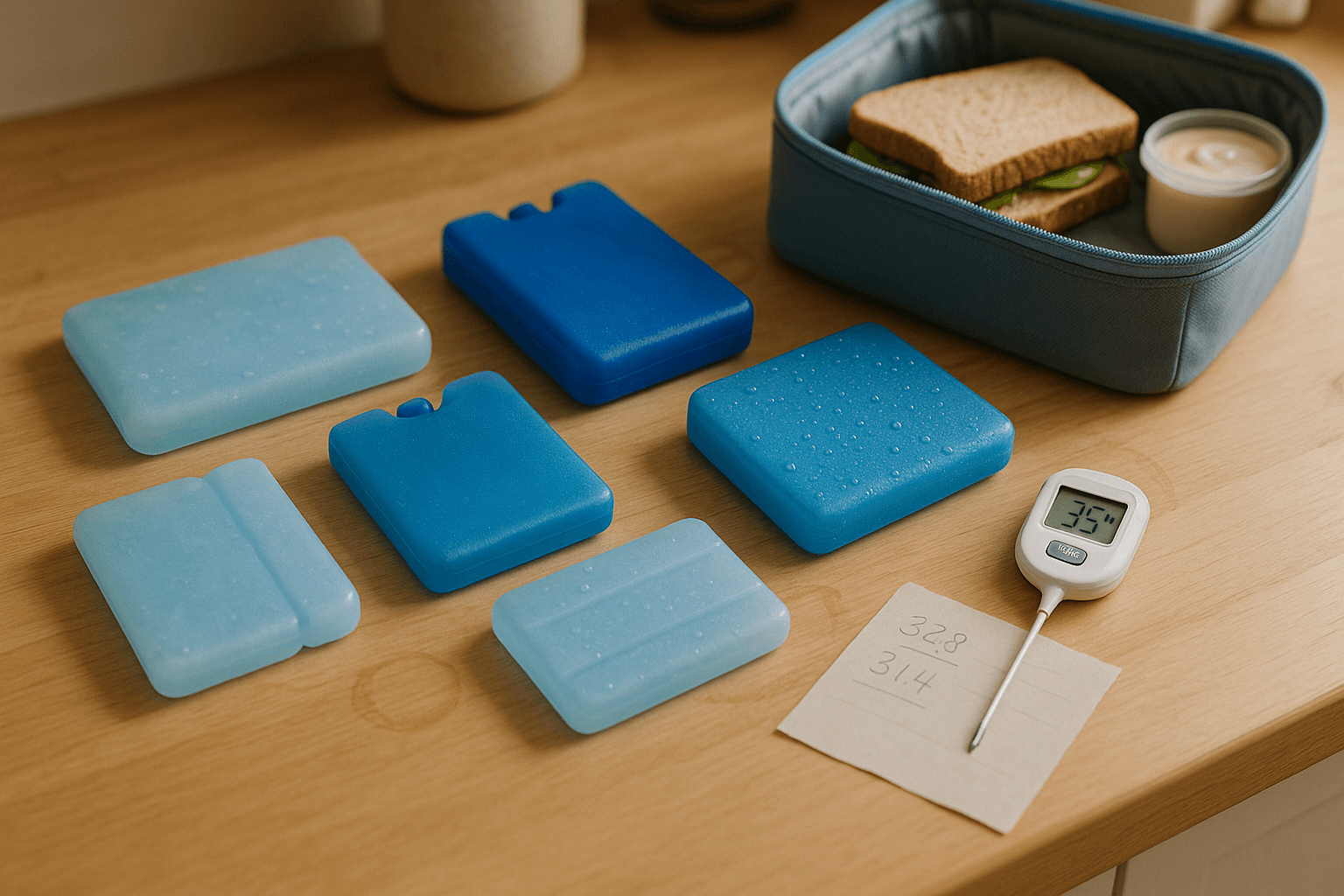
I tested these ice packs like a parent, not a lab technician. Real lunch boxes, real Australian summer heat (25-32°C), real school day timeline from 9am pickup to 3pm collection.
The 6 ice packs tested:
- Bentgo Reusable Ice Packs (4-pack) — $24.99
- Fit & Fresh Cool Coolers (4-pack) — $18.99
- Generic gel pack (discount store) — $3.99
- Water-based flexible pack — $6.99
- Premium reusable brand — $34.99
- Disposable instant packs (10-pack) — $12.99
I used a digital probe thermometer, checking every hour from 9am to 3pm. Each ice pack started at -2°C (properly frozen overnight) and went into identical lunch boxes with the same food load.
Testing methodology
Freeze overnight
All packs frozen for minimum 8 hours at -18°C
Pack at 8:30am
Standard lunch items: sandwich, yoghurt, apple, water bottle
Temperature checks
Hourly readings from 9am-3pm using calibrated digital thermometer
Food safety assessment
Final check: did perishable items stay below 5°C threshold?
The test conditions matched real school scenarios — lunch boxes sitting in bags, occasional opening, Australian summer classroom temperatures.
Test Results: Which Ice Packs Actually Keep Food Cold
The performance gap was massive. After 6 hours, the best ice pack kept yoghurt at 3°C while the worst hit 12°C — well into the danger zone.
Ice pack performance results
Bentgo Reusable
$24.99
- ·Stayed below 5°C for 5.5 hours
- ·Thick gel construction
- ·No leaking after 6 weeks
Consistent performance
Durable construction
Perfect size for most lunch boxes
Higher upfront cost
Takes 6+ hours to refreeze
Best overall performer for daily use
Fit & Fresh Cool Coolers
$18.99
- ·Safe zone for 4.5 hours
- ·Flexible when frozen
- ·Good value 4-pack
Great price point
Reliable performance
Fits small lunch boxes
Slightly shorter cooling time
Thinner construction
Solid budget choice for most families
Generic gel pack
$3.99
- ·3 hours safe cooling
- ·Very basic construction
- ·Single pack only
Extremely cheap
Available everywhere
Failed after 3 hours
Leaked within 2 weeks
Poor temperature retention
False economy — you'll replace it quickly
The premium $34.99 option performed only marginally better than the Bentgo packs — about 15 minutes longer in the safe zone. Not worth the extra $10 for most families.
Disposable packs were a disaster. They worked for 2-3 hours maximum and cost more per use than quality reusables over a school term.
What Makes an Ice Pack Keep Food Cold Longer
After cutting open the failed packs (don't try this at home), the differences were obvious. The best performers had dense gel formulations that changed phase slowly, releasing cold gradually rather than all at once.
Thickness matters more than size. A thin large pack performed worse than a thick small one because it couldn't maintain its frozen core temperature.
The sweet spot is 15-20mm thickness with high-density gel. Anything thinner fails by lunch time, anything thicker won't fit in standard lunch boxes.
Pre-freezing time directly impacts performance. Packs frozen for 12+ hours lasted 30% longer than those frozen for just 6 hours. I started freezing Sunday night for Monday lunches.
Gel beats water every time. Water-based packs hit room temperature within 3 hours while gel maintained cooling for 5+ hours.
Ice Pack Safety: What Parents Need to Know
Leaking ice packs are the biggest safety concern. I had 3 packs rupture during testing — all cheap generic brands with thin plastic seams.
Signs your ice pack is failing:
- Bulging or distorted shape when frozen
- Wet spots on the outside after thawing
- Gel becoming clumpy rather than smooth
- Reduced cooling performance
The gel inside quality packs is non-toxic (sodium polyacrylate — the same stuff in nappies) but you still don't want it on food. I wrap ice packs in paper towel to catch minor leaks and prevent direct contact with lunch items.
Placement matters
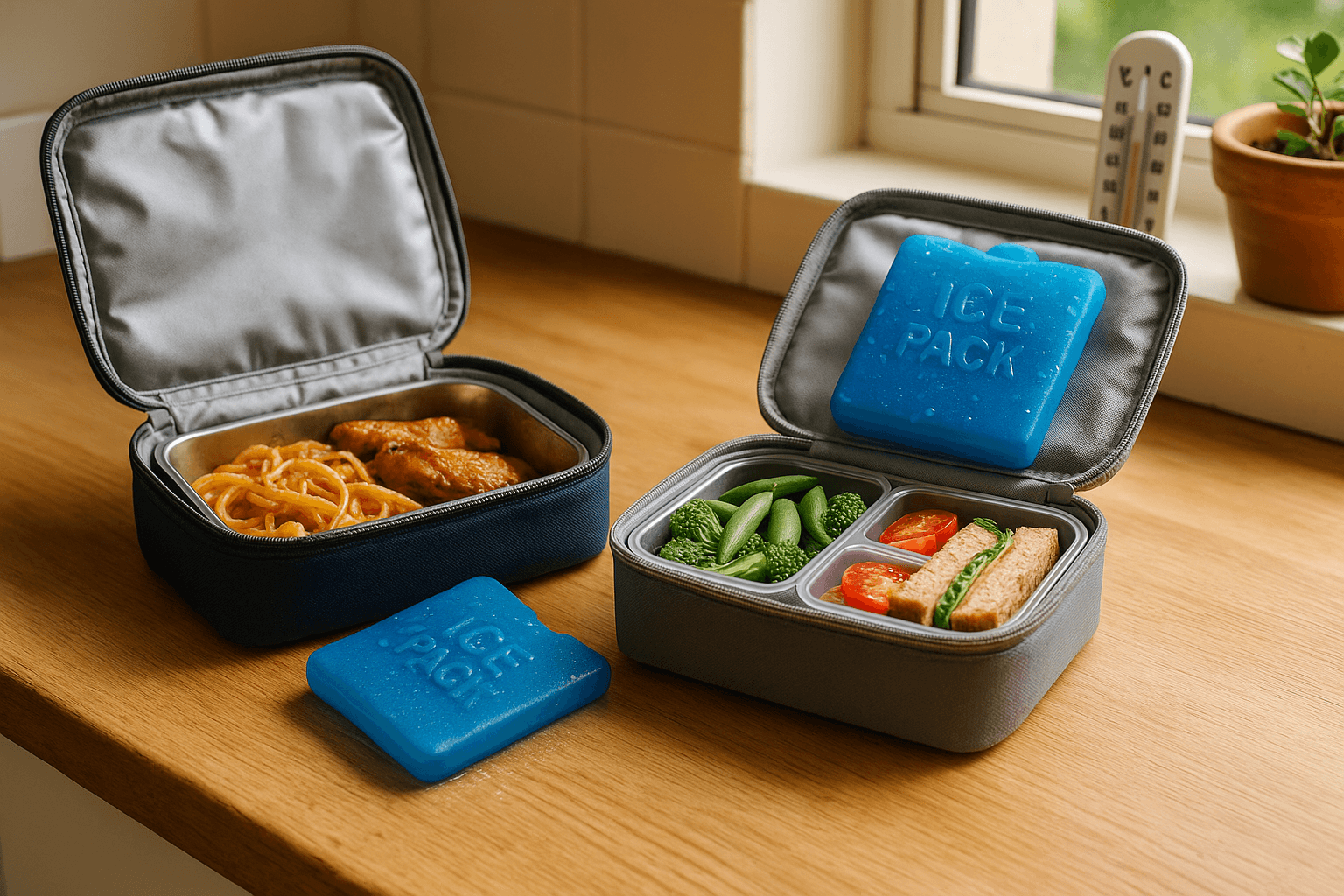
Put ice packs on top of food, not underneath. Cold air sinks, so top placement keeps everything below cool. Bottom placement only chills the lunch box itself.
For high-risk foods like dairy and meat in make-ahead lunch food strategies, I use 2 ice packs — one on top, one on the side. It's overkill for crackers and fruit, essential for yoghurt and ham sandwiches.
How to Choose the Right Ice Pack for Your Lunch Box
Size matching is critical. I tested packs in small (Sistema), medium (Yumbox) and large (Bentgo) lunch boxes. The same ice pack performed differently in each.
Small lunch boxes (under 1L): 1-2 slim packs maximum. The Fit & Fresh packs work perfectly.
Medium lunch boxes (1-2L): 2 standard packs or 1 large pack. Bentgo packs are ideal.
Large lunch boxes (2L+): 3+ packs needed for all-day cooling. Consider the best Australian lunch boxes with dedicated ice pack compartments.
Cost analysis over 12 months
Fit & Fresh 4-pack
$19 upfront
- Replace annually
- $0.10 per school day
- Basic performance
Bentgo 4-pack
$25 upfront
- 2+ year lifespan
- $0.07 per school day
- Superior performance
Premium brand
$35 upfront
- Marginal improvement
- $0.09 per school day
- Diminishing returns
The Bentgo packs win on cost-per-use over time. They're still performing after 6 months of daily use while I've replaced 2 cheap generic packs.
For families managing tight budgets, check our school lunch cost analysis for strategies that include proper cooling gear investment.
Troubleshooting: When Ice Packs Don't Work
Ice pack won't freeze solid: Your freezer might be too full or temperature too high. Ice packs need good air circulation and -18°C minimum.
Not keeping food cold enough: You probably need more packs or better lunch box insulation. Single thin packs can't handle Australian heat.
Leaking mid-week: Stop using immediately. Cheap packs often fail at the seams after thermal cycling. This is why I recommend buying quality upfront.
Emergency cooling solutions
DIY ice packs work short-term but aren't reliable long-term. I tried frozen wet sponges, water bottles, even frozen grapes. They all failed by hour 3.
The Bottom Line: Best Ice Packs for Australian Families
After 6 weeks of testing, the Bentgo Reusable Ice Packs win for most families. They consistently kept food safe for 5.5 hours, survived daily use without leaking, and cost less per use than cheaper alternatives.
For budget-conscious families, the Fit & Fresh Cool Coolers deliver solid 4.5-hour performance at $19 for a 4-pack. You'll replace them annually but they're reliable while they last.
Don't buy single packs or generic brands. The performance gap isn't worth the savings, and you'll spend more replacing failed units.
Premium packs aren't worth the extra cost unless you're dealing with extreme weather lunch strategies where every minute counts.
The real game-changer isn't the most expensive ice pack — it's having enough properly frozen packs for your lunch box size and Australian conditions.
How useful was this?
Get 20 Cold-Safe Lunch Ideas That Actually Work
Printable cheat sheet with temperature-safe lunches your kids will eat. Perfect for ice pack users.
Written by Pat
Dad of two, Melbourne. Half Chinese, raised on incredible food. I make quick school lunches and test every piece of gear before recommending it. No bento art — just real food made with love.