In this article
Autumn mornings mean one thing: kids want warm, comforting food but most Australian schools don't have microwaves. These 15 warm lunch ideas for school autumn will keep your kids satisfied and well-fed using just a thermos and smart morning prep. I've tested every recipe with my own kids and timed the prep — nothing here takes longer than 15 minutes.
Why warm lunch ideas matter for school in autumn
The statistics tell a sobering story: 90% of Australian school children bring home-packed lunches, with 44% eating unhealthy food during school hours. When temperatures drop in autumn, cold sandwiches become even less appealing.
Warm foods naturally increase nutritional intake because kids actually eat them. A steaming bowl of vegetable soup gets demolished while the same vegetables in a cold wrap come home untouched.
93%
of Australian parents want school lunch programs but cite nutrition quality as their main concern
Flinders University 2026
When schools can't provide warm, nutritious options, parents need thermos solutions
Most Australian primary schools lack microwave access for student lunches. Thermos containers become the bridge between what kids want (warm comfort food) and what's actually possible during the school day.
The average cost of home-packed lunches runs about $4.50 per child daily. Warm thermos meals often cost less than cold alternatives because they rely on budget-friendly ingredients like legumes, seasonal vegetables and leftover proteins stretched with grains.
The thermos solution: getting warm lunches right
A quality thermos food jar works through double-wall vacuum insulation. The space between walls contains virtually no air, preventing heat transfer. Food stays hot for 4-6 hours in properly designed containers.
The key lies in preheating. Fill your thermos with boiling water while you pack other lunch items. After 5 minutes, empty the water and immediately add piping hot food. This simple step extends heat retention by 2-3 hours.
Perfect thermos prep technique
Boil water
Start kettle while gathering other lunch items
Fill thermos
Pour boiling water into thermos, close lid
Heat food
Warm your prepared meal to steaming hot
Empty and fill
Dump water, immediately add hot food, seal tight
Pack last
Place thermos in lunchbox just before leaving
For primary school children, a 290ml thermos provides appropriate portions without overwhelming smaller appetites. The wider opening makes eating easier for younger kids and simplifies morning filling.
Condensation kills warm lunches. Avoid adding cold ingredients to hot food, and ensure your thermos lid seals completely. Pack the thermos upright and surround it with room-temperature items, never cold packs.
15 autumn warm lunch ideas that actually work
These recipes prioritise ingredients that hold heat well, won't turn soggy and appeal to school-age taste preferences.
Soup-based options:
- Minestrone with hidden vegetables — Blend half the vegetables for texture-sensitive kids
- Creamy pumpkin and chickpea soup — Seasonal autumn flavours with protein boost
- Vegetable barley soup — Hearty grains keep kids full until afternoon
Rice and grain bowls:
- Chicken and vegetable risotto — Creamy texture works perfectly in thermoses
- Vegetable fried rice with scrambled egg — Use day-old rice for better texture
- Mild butter chicken with basmati rice — Tone down spices for school palates
Texture matters
Avoid pasta in thermoses unless it's very al dente to start. Overcooked pasta becomes mushy after hours of heat retention. Rice and grains hold their texture much better.
Protein-rich mains:
- Lentil bolognese with rice — Familiar flavours, plant-based protein
- Beef and vegetable stew — Cut vegetables small for easy thermos eating
- Baked beans with ground turkey — Upgrade the classic with lean protein
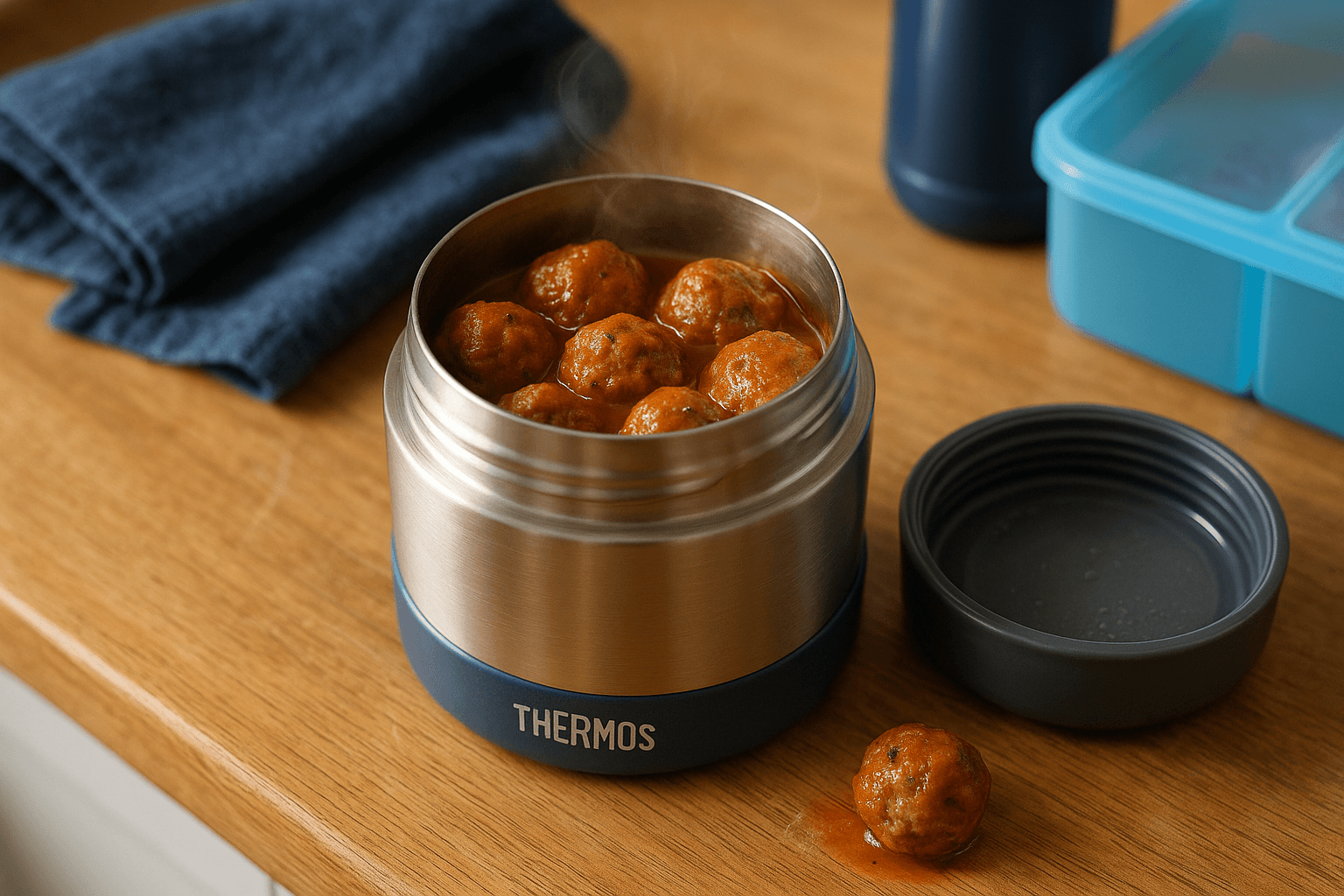
- Tomato-based chicken meatballs — Make them small for spoon-friendly eating
Creative comfort foods:
- Aussie meat pie filling with mashed potato — All the flavour without soggy pastry
- Fish pie filling — Creamy fish and vegetables over rice
- Sweet potato and chickpea dhal — Mild curry flavours with autumn vegetables
- Cheesy pasta with hidden zucchini — Use short pasta shapes, not long noodles
- Leftover dinner transformations — Casseroles, curries and stews reheat perfectly
The secret to thermos success is thinking about how food behaves after hours of heat. Saucy dishes work better than dry ones. Foods with natural thickeners (beans, lentils, pureed vegetables) maintain better texture than those relying on dairy-based sauces.
Making mornings manageable: 15-minute prep strategies
Sunday batch cooking transforms chaotic mornings into smooth routines. Prepare 3-4 thermos-friendly meals and refrigerate in family-sized portions. Each morning becomes a simple reheat-and-pack operation.
The assembly line method works when you have multiple kids or want to prep several days ahead. Heat one large batch of food, then fill multiple containers simultaneously. Preheat all thermoses together using a large pot of boiling water.
Efficient morning routine
Start kettle
Begin preheating while making coffee
Heat food
Microwave or stovetop reheat to steaming
Fill thermos
Empty hot water, add food immediately
Pack extras
Add cold sides, fruit, water bottle
Final check
Ensure thermos lid is tight, pack in bag
Strategic leftover use eliminates dedicated lunch prep. When making dinner, deliberately cook extra portions of thermos-friendly meals. Refrigerate in lunch-sized containers ready for next-day reheating.
Slow cooker overnight cooking creates perfect morning scenarios. Set up ingredients before bed, wake to house-filling aromas and lunch-ready food. Transfer portions directly from slow cooker to preheated thermoses.
Pantry staple combinations provide backup options for mornings when batch cooking runs out. Canned beans plus rice plus frozen vegetables creates infinite variations with different seasonings and broths.
Keeping it safe: food safety with warm lunches
Australian climate conditions demand extra attention to food safety. The 4-hour rule states that food between 5°C and 60°C becomes unsafe after 4 hours. Quality thermoses maintain food above 60°C for 4-6 hours, providing safe eating windows.
Temperature check
Food should still feel warm when your child opens their thermos at lunch. If it's merely lukewarm or cool, it's potentially unsafe. Teach kids to assess temperature before eating.
Autumn temperatures in most Australian regions hover between 15-25°C — the danger zone for bacterial growth. Unlike winter's cold that helps preserve food, autumn's mild temperatures accelerate spoilage in inadequately insulated containers.
School policies vary regarding thermoses and hot food containers. Check your school's guidelines before sending warm lunches. Some schools restrict glass containers or have specific requirements for leak-proof sealing.
Cooling rate indicators help parents gauge thermos performance. Food that's steaming hot when packed should remain very warm (not just lukewarm) after 4-5 hours. If your thermos fails this test, it needs replacement or your preheating technique needs adjustment.
Packing order affects temperature retention. Place the thermos in the centre of the lunchbox, surrounded by room-temperature items. Never pack ice packs directly against thermoses — the cold transfer undermines insulation.
Signs food has cooled too much include absence of steam when opened, lukewarm temperature to touch, or off smells. Train kids to recognise these warning signs and avoid eating questionable food.
Get Your Free Lunchbox Cheat Sheet
20 warm and cold lunch ideas on one printable page for busy mornings
Troubleshooting common thermos problems
Food not staying warm long enough usually indicates inadequate preheating or insufficient initial food temperature. The food must be steaming hot — not just warm — when added to the preheated thermos.
Thermos quality varies dramatically. Budget containers often lose significant heat within 2-3 hours. Invest in reputable brands with proven insulation performance for reliable results.
Condensation making food soggy occurs when temperature differentials create moisture buildup. Avoid adding cold ingredients to hot food, and ensure thermos lids seal completely without gaps.
290ml vs 400ml thermos sizing
Pros
290ml: Perfect for primary school appetites
290ml: Easier for small hands to manage
290ml: Fits standard lunchboxes better
400ml: Better for older kids or big eaters
400ml: Maintains temperature longer due to volume
Cons
290ml: May be too small for teenagers
290ml: Less thermal mass for heat retention
400ml: Can overwhelm younger children
400ml: Takes up significant lunchbox space
Thermos leaking into lunchboxes destroys other lunch components and creates mess. Check rubber seals regularly for wear, cracks or food buildup. Replace damaged seals or upgrade to more reliable containers.
Keeping cold items cold while packing hot food requires strategic lunchbox organisation. Use insulated compartments or separate cooling elements positioned away from the thermos.
Thermos smell and staining develops from inadequate cleaning or strong-flavoured foods. Soak overnight in bicarbonate of soda solution, then scrub with bottle brushes designed for narrow openings.
Durability issues signal replacement time. Dents in double-wall construction compromise insulation. Persistent odours or staining indicate material breakdown. Quality thermoses should last 2-3 years with daily school use.
Budget-conscious warm lunch ideas using pantry staples
Thermos lunches cost significantly less than school lunch programs or pre-packaged alternatives. The average home-packed lunch costs $4.50 daily, but thermos meals using pantry staples often run $2-3 per serve.
Weekly lunch cost comparison
Seasonal autumn ingredients provide both nutrition and cost savings. Pumpkin, sweet potato, carrots and other root vegetables reach peak affordability during autumn months. These vegetables also work perfectly in thermos-friendly soups and stews.
Batch cooking economics dramatically reduce per-serve costs. A large pot of lentil soup might cost $8 in ingredients but yield 12 child-sized portions — just 67 cents per serve.
Affordable protein sources for warm lunches include eggs, canned fish, dried legumes and small amounts of mince stretched with vegetables and grains. These proteins cost less than deli meats while providing superior nutrition.
Canned beans and lentils create endless combinations when paired with different vegetables, grains and seasonings. A pantry stocked with various beans, rice, pasta and basic spices generates dozens of warm lunch options.
Stretching meat with vegetables and grains maximises protein value. One chicken breast diced into vegetable risotto serves 2-3 children, while the same breast in sandwiches serves just one.
Pantry staples that create reliable combinations include rice (pairs with anything), canned tomatoes (base for countless sauces), frozen mixed vegetables (adds nutrition and bulk), and various dried herbs and spices for flavour variety.
Packing the complete autumn lunchbox with warm food
Thermos placement affects both temperature retention and lunchbox organisation. Position the thermos centrally, surrounded by room-temperature items that provide insulation without competing for thermal energy.
Pairing warm mains with cold sides creates satisfying meal balance. Fresh fruit, cheese sticks, crackers or vegetable sticks complement hot thermos contents without requiring additional heating.
Complete warm lunchbox checklist
Vegetable inclusion becomes easier with warm lunches because vegetables blend seamlessly into soups, stews and rice dishes. Kids who reject raw vegetables often accept them in warm, flavourful contexts.
Bento box approaches work well with thermos as the main compartment. Use the thermos for the protein and vegetable component, then fill remaining compartments with fruits, crackers and other finger foods.
Avoiding sogginess requires understanding moisture dynamics. Steam from hot food can condense on lunchbox walls and drip onto other items. Use moisture-resistant packaging for items sensitive to humidity.
Drink placement deserves consideration when packing hot food. Cold drinks create temperature conflicts if placed directly against thermoses. Position water bottles and juice boxes away from the thermos or use insulating barriers.
Lunchbox setup for heat retention involves treating the entire container as an insulation system. Fill empty spaces with non-perishable items that provide thermal mass without creating cold zones.
Utensil selection matters for thermos eating. Wide spoons work better than narrow ones for thick soups and stews. Include napkins or wet wipes since warm foods can be messier than cold sandwiches.
The complete autumn lunchbox combines thermal efficiency with practical eating considerations. Your child should be able to open, eat and clean up their warm lunch without assistance, making the thermos solution sustainable for daily school use.
How useful was this?
Get Your Free Autumn Lunch Planner
20 warm and cold lunch ideas on one printable page — perfect for busy autumn mornings.
Written by Pat
Dad of two, Melbourne. Half Chinese, raised on incredible food. I make quick school lunches and test every piece of gear before recommending it. No bento art — just real food made with love.