In this article
Picture this: You pack your kid's lunch at 7am, they eat it at 1pm. That's 6 hours in a schoolbag, often sitting in hot classrooms. <cite index="5-18,25-11">Kid's lunches can sit in school bags for up to 5 hours from when the food is prepared to when it's eaten</cite>, but for many dual-income Aussie families, it's even longer.
The 4-hour rule isn't just food service jargon – it's the difference between a safe lunch and a sick kid. Here's everything you need to know to keep your child's lunch safe, even on those marathon school days.
What is the 4-Hour Rule and Why Every Aussie Parent Needs to Know It
The 4-hour rule is simple: potentially hazardous foods become unsafe after 4 hours in the temperature danger zone (5°C to 60°C). This is where bacteria multiply rapidly, doubling every 20 minutes.
For Australian parents, this matters more than you might think. <cite index="12-20,19-1">90% of Australian school children bring a home-packed lunch to school</cite>, but most of us are flying blind when it comes to food safety timing.
The temperature danger zone isn't just about hot food cooling down – it's about everything that needs refrigeration. Ham sandwiches, yoghurt, cheese, milk-based drinks, and even some fruits once they're cut. In our climate, a lunchbox can hit dangerous temperatures faster than you'd expect.
Australian Reality Check
In summer, a lunchbox left in a car or hot classroom can reach 30°C+ within 30 minutes, putting food squarely in the danger zone.
The stakes are real. Food poisoning in kids isn't just an upset tummy – it can mean days off school, missed work for parents, and in severe cases, hospitalisation.
The Reality Check: Why Most Lunchboxes Fail the 4-Hour Test
Here's the maths that'll make you rethink your morning routine:
Typical dual-income family timeline:
- 7:00am: Pack lunch (food at fridge temperature ~4°C)
- 7:30am: Leave for school (lunchbox in bag)
- 8:30am: Arrive at school (lunchbox in classroom or locker)
- 1:00pm: Lunch break (6 hours since packing)
That's 6 hours, not 4. And that's assuming your kid eats straight away, not saves half for later.
<cite index="25-23">Sandwiches in paper bags were up to 12°C warmer than lunch boxes with frozen drinks</cite>. This NSW Food Authority study shows just how quickly things go wrong without proper cooling.
Reality Timeline: 7am Pack to 1pm Eat
Pack & Go
Food starts at 4°C, begins warming immediately
School Drop-off
1.5 hours elapsed, food likely 8-12°C in insulated box
Danger Zone
4 hours in - without cooling, food hits unsafe temperatures
Lunch Time
6 hours total - well beyond safe limits without proper cooling
The problem gets worse in Australian conditions. Hot cars during drop-off, classrooms without air conditioning, and kids forgetting lunchboxes in the sun all push temperatures higher, faster.
Morning Maths: Calculating Your Family's Food Safety Timeline
Time to do your own calculations. Grab a pen and work out your family's real timeline:
Calculate Your Food Safety Window
Start Time
When do you actually pack the lunch? (Not when you plan to, when you really do)
Transport Time
Add travel time to school - include any stops or delays
Storage Time
When does lunch go into classroom/locker? Add this to your total
Lunch Break
What time does your child actually eat? (Ask them - it might not be when lunch 'starts')
Total Hours
Add it up. If it's over 4 hours, you need active cooling or different food choices
Night-before prep reality check: If you're prepping the night before and your child eats at 1pm the next day, you're looking at 12+ hours. The 4-hour rule doesn't apply to refrigerated storage, but once that lunchbox leaves the fridge, the clock starts ticking.
Australian heat multiplier: On days over 30°C, cut your safe time in half. What might be okay for 4 hours in winter could be dangerous after 2 hours in summer.
Get the Free Gear Guide
Compare the top lunchboxes and cooling gear that actually work for 6+ hour days
Smart Food Choices That Beat the 4-Hour Rule Every Time
The easiest way to win the 4-hour game? Choose foods that don't need to play it.
Shelf-stable champions:
- Whole fruits (apples, bananas, mandarins)
- Nuts and seeds (if school allows)
- Crackers and rice cakes
- Dried fruits
- Popcorn
- Muesli bars
- Peanut butter sandwiches (if using shelf-stable PB)
Fresh foods that last longer:
- Cherry tomatoes
- Carrots and celery sticks
- Capsicum strips
- Cucumber rounds
- Grapes (whole, not cut)
Foods to avoid on long days:
- Ham, chicken, or other deli meats
- Dairy products (yoghurt, cheese sticks, milk)
- Cut fruits (apples, stone fruits)
- Egg-based foods
- Mayo-based salads
- Cream cheese anything
The golden rule: If it needs refrigeration at the supermarket, it needs cooling in the lunchbox or should be eaten within 4 hours.
Recipe spotlight: Banana Oat Energy Balls These shelf-stable treats are perfect for long school days:
- 2 ripe bananas, mashed
- 1½ cups rolled oats
- ¼ cup peanut butter
- 2 tbsp honey
- ¼ cup mini chocolate chips
Mix, roll into balls, and store at room temperature for up to 3 days. No cooling required, and kids love them.
Ice Packs vs Thermos: What Actually Works for 6+ Hour School Days
I've tested this stuff in real Australian conditions, not lab settings. Here's what actually works:
Ice pack reality:
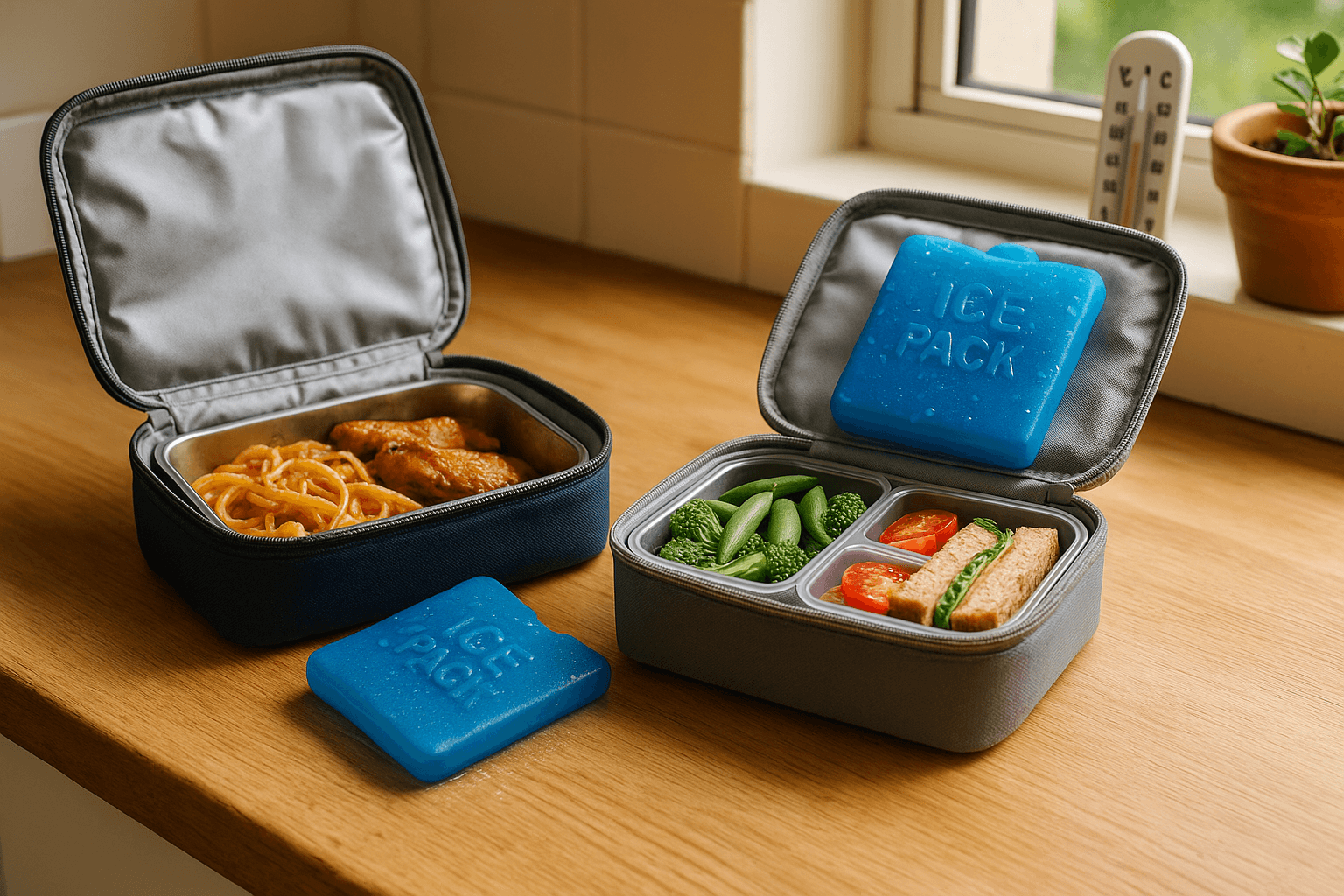
- Standard gel ice packs: Good for 3-4 hours in moderate weather
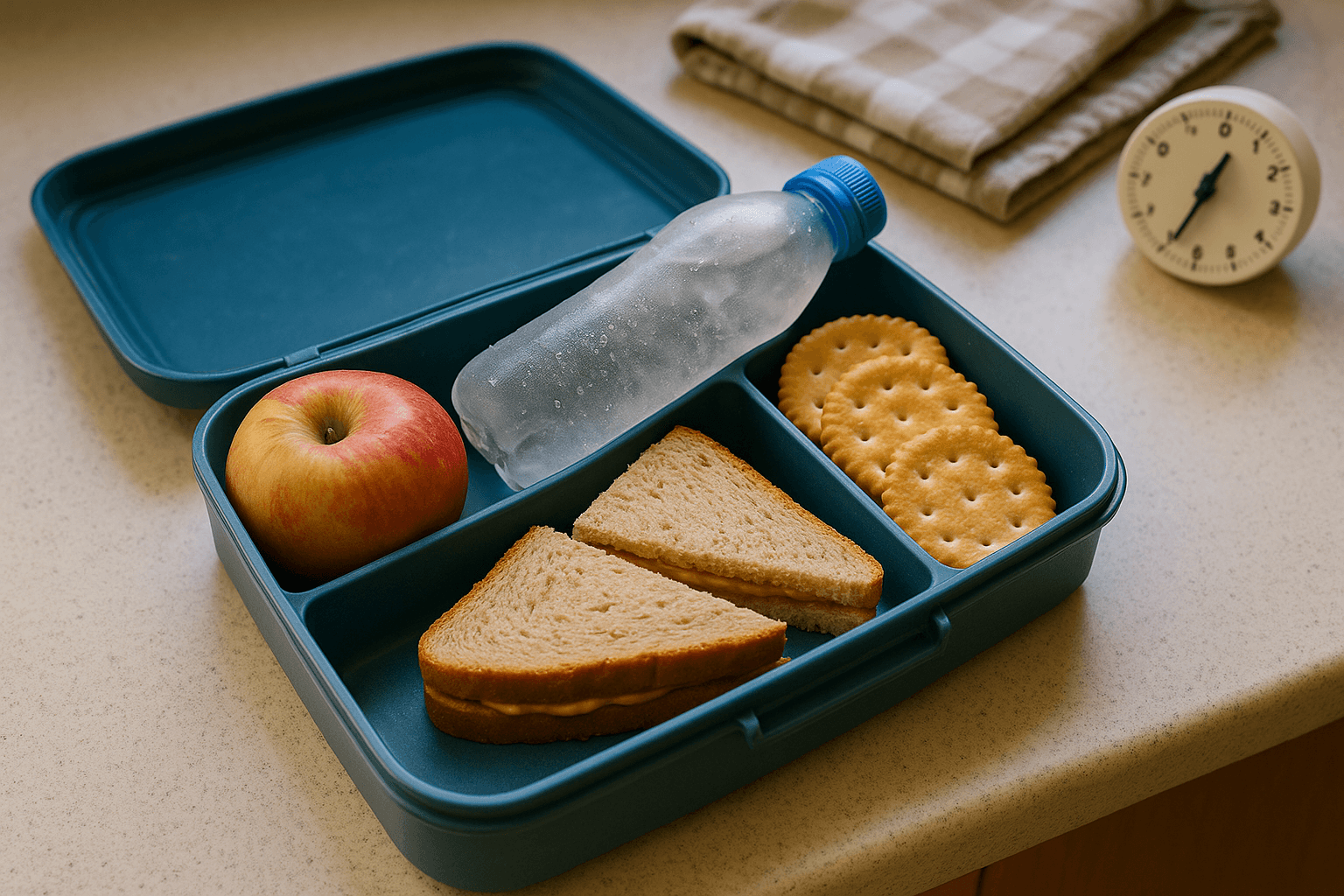
- Frozen water bottles: 4-5 hours, plus your kid gets cold water
- Multiple small ice packs: Better than one large one
- Pre-cooling the lunchbox: Add 1-2 hours to ice pack life
Cooling Solutions: 6-Hour Test Results
Single Gel Ice Pack
$3
- ·Standard size
- ·Reusable
- ·Fits most lunchboxes
Cheap
Easy to use
Only lasts 3 hours
Takes up space
Not enough for long days
Frozen Water Bottle
$0
- ·Dual purpose
- ·Large thermal mass
- ·Free
Cools for 4-5 hours
Kid gets cold drink
No extra cost
Heavy when frozen
Can leak when melting
Best budget option
Thermos Food Jar 290ml
$35
- ·Vacuum insulated
- ·Keeps cold 7+ hours
- ·Leak-proof
Exceeds 4-hour rule
Perfect portion size
No ice packs needed
Higher upfront cost
Limited to one item
Best for perishable foods
Thermos containers win for perishable foods. A quality best food thermos options like the Thermos FUNtainer Food Jar 290ml keeps yoghurt, cheese, and other dairy products safely cold for 7+ hours. Yes, it costs more upfront, but it's foolproof.
Ice pack strategy for budget-conscious families:
- Use 2-3 small ice packs instead of one large one
- Freeze insulated water bottles as cooling aids
- Pre-cool your lunchbox in the fridge for 30 minutes
- Pack frozen items against perishable foods
For extreme heat days, check out these extreme weather lunchbox strategies that go beyond basic cooling.
Your 5-Minute Morning Routine for Food-Safe Lunchboxes
Time-poor parents need systems, not extra stress. Here's your foolproof routine:
5-Minute Food Safety Checklist
Pre-cooling hack: Keep your empty lunchbox in the fridge overnight. This simple step adds 1-2 hours to your safe window.
Strategic packing order:
- Ice packs/frozen bottles go in first
- Perishable foods go directly against cooling sources
- Insulating foods (bread, crackers) create barriers
- Room temperature items fill remaining space
Emergency backup plan: Keep shelf-stable alternatives in your pantry. Forgot ice packs? Swap the ham sandwich for peanut butter, replace yoghurt with a muesli bar.
This 5-minute lunch packing system shows you how to prep multiple lunchboxes efficiently without compromising safety.
Dad Hack
Prep a "hot day" lunchbox template with only shelf-stable foods. When it's over 30°C or you're rushing, just follow the template – no food safety calculations needed.
Budget-friendly cooling solutions:
- Bentgo Reusable Ice Packs (4-pack) - $12, perfect size for most lunchboxes
- PackIt Freezable Lunch Bag - $25, the whole bag freezes
- Sistema Bento Lunch Box with ice pack compartment - $18
The 4-hour rule doesn't have to complicate your mornings. With the right gear and a simple system, you can pack safe, nutritious lunches that work for real Australian families dealing with real time pressures.
Your kids deserve safe food, and you deserve peace of mind. Start with calculating your family's timeline, then choose the cooling strategy that fits your budget and routine.
How useful was this?
Compare Top Cooling Gear That Actually Works
Get ratings, prices and real-world test results for lunchboxes, ice packs and thermos containers
Written by Pat
Dad of two, Melbourne. Half Chinese, raised on incredible food. I make quick school lunches and test every piece of gear before recommending it. No bento art — just real food made with love.