In this article
Good Easter lunch box ideas don't require chocolate, cookie cutters, or a spare hour. The 10 ideas below are nut-free, built around standard supermarket staples, and most can be packed in under 15 minutes — several using what you've already cooked on Sunday.
According to a 2024 study published in Health Promotion International, 90% of Australian school children bring a home-packed lunch, yet 44% of the food consumed during school hours is classified as unhealthy or discretionary. Easter week is an easy trap — the shops are full of chocolate, and festive lunchbox content online leans hard into treats. This guide goes the other way.
Why Easter lunchboxes often miss the mark
Most Easter lunchbox content is written for parents with a free afternoon and a craft supply budget. What Australian parents actually need are ideas that clear four real hurdles: a $6/day spend cap, nut-free school policies, a 15-minute packing window, and a child who will reject anything that looks unfamiliar.
A 2024 survey of Victorian parents published in the Health Promotion Journal of Australia found that 61% agreed they need more meal ideas to create healthy lunches, and just over half included vegetables in their child's lunchbox daily. Easter is a genuine opportunity to do better — not by adding themed decorations, but by building a lunchbox that hits core food groups using the seasonal cooking you're already doing.
The other gap in existing content: no one addresses the Sunday cook-ahead angle. If you're roasting lamb or boiling eggs on Easter Sunday, you're already halfway to Tuesday's lunchbox. More on that below.
44%
of food eaten at school is classified as unhealthy or discretionary
Health Promotion International, 2024
90% of Australian kids bring a home-packed lunch
10 Easter lunch box ideas your kids will actually eat
Each idea below includes a cost-per-serve estimate based on standard Coles/Woolworths pricing. All are nut-free.
1. Hard-boiled egg nest with roasted carrots and hummus — $1.20/serve
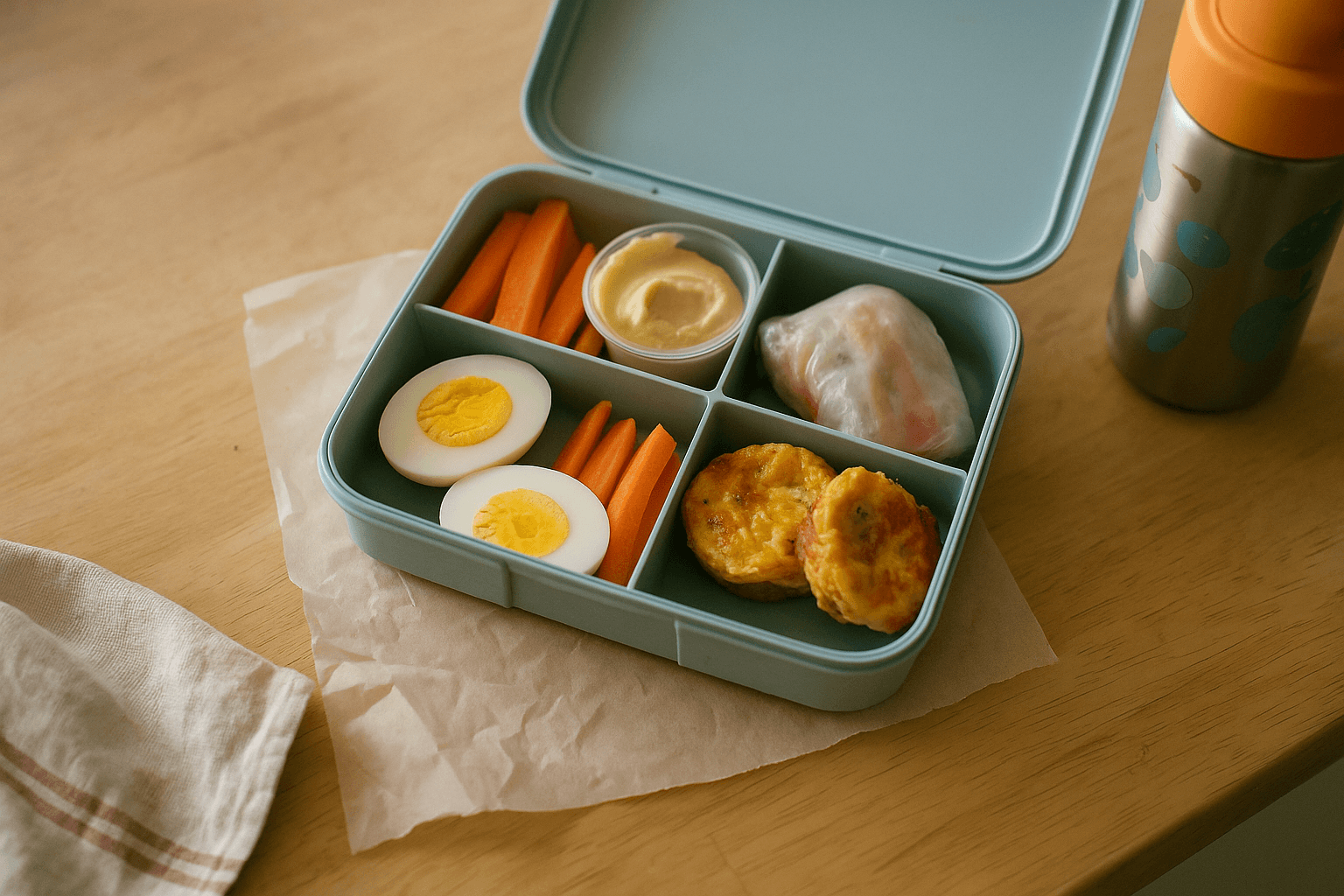
Hard-boiled eggs are the Easter symbol that actually earns its place in a lunchbox. Two eggs, a handful of roasted carrot batons and a 30g tub of hummus. Pack the carrots in a separate compartment to keep them from making the egg wet. If you've boiled eggs on Sunday, this is a 2-minute pack on Tuesday morning.
2. Mini chicken and corn frittata cups — $1.50/serve
Make a batch of 12 on Sunday; they keep refrigerated for 3 days and freeze for up to 2 weeks. Two cups per lunchbox with pastel capsicum sticks (yellow and orange) on the side. The colour does the Easter work without any extra effort. [Full recipe: Mini Chicken and Corn Frittata Cups.]
3. Rainbow veggie rice paper rolls — $1.80/serve
Rice paper rolls travel well if you pack the dipping sauce separately and don't overfill them. Use red capsicum, cucumber, shredded carrot and vermicelli noodles for the colour range. The pastel-on-white look is naturally festive. [Full recipe: Rainbow Veggie Rice Paper Rolls.]
4. Glazed lamb and herb rice balls with cherry tomatoes — $2.10/serve
This is the Sunday roast repurpose. Shred 80g of leftover lamb, mix with 100g of cooked rice and a pinch of dried herbs, roll into balls and refrigerate overnight. Pack cold with 6 cherry tomatoes. The $2.10 cost assumes you're using Easter roast leftovers — buying fresh lamb for this would push it to around $3.60.
5. Cheesy zucchini slice squares — $0.95/serve
The most budget-friendly option on the list. Slice into squares, pack 2–3 per lunchbox with cucumber rounds and a small pot of cream cheese or hummus. Freezes well. [Full recipe: Cheesy Zucchini Slice Squares.]
6. Tuna and white bean patties with lemon dressing — $1.40/serve
Tuna and white bean patties are high-protein, nut-free, and take about 20 minutes to make a batch of 8. Dress them with a squeeze of lemon before packing — it keeps them from tasting flat when cold. [Full recipe: Tuna and White Bean Patties.]
7. Ham and cheese muffins with spring greens — $1.10/serve
Savoury, not sweet. Two muffins plus a small handful of snow peas or sugar snap peas. Use wholemeal flour if you want to boost fibre. These are the most reliably eaten item on this list — even cautious eaters accept a cheese muffin. [Full recipe: Ham and Cheese Muffins.]
8. Pumpkin and chickpea patties with beetroot and feta — $1.35/serve
The colour combination — orange pumpkin, deep pink beetroot, white feta — is naturally Easter-adjacent without any theming. Two patties, a few cubes of roasted beetroot and a small amount of crumbled feta. [Full recipe: Pumpkin and Chickpea Patties.]
9. Vegemite and cheese scrolls with carrot batons — $0.85/serve
The cheapest complete lunchbox item here. Use puff pastry from the freezer section, spread with Vegemite and grated cheese, roll, slice and bake. Two scrolls plus carrot batons. Familiar enough for cautious eaters, and the batons add crunch without asking anyone to try anything new. [Full recipe: Vegemite and Cheese Scrolls.]
10. Banana oat energy balls with pastel sprinkles — $0.70/serve
Two ingredients at the core — ripe banana and rolled oats — with optional honey and a pinch of cinnamon. The pastel sprinkles are the only Easter-specific purchase, and they cost about $3 for a jar that'll last the year. Roll into balls, refrigerate for 30 minutes, done. [Full recipe: Banana Oat Energy Balls.]
Age-based breakdown: what works for 4–6, 7–9, and 10–12
Not every idea suits every age. Here's a practical split:
Ages 4–6: Prioritise soft textures and finger foods. Frittata cups, scrolls, rice balls and energy balls all work. Avoid anything that requires a fork or produces mess — this age group is still developing fine motor skills and a complicated lunchbox often comes home untouched.
Ages 7–9: This group can handle wraps, patties and rice paper rolls. They're slightly more adventurous but still need familiar anchor flavours — cheese, ham, egg. Introduce one new element per lunchbox rather than two.
Ages 10–12: Higher volume, more complex flavours, and increasingly capable of packing their own lunch. All 10 ideas work for this group. Focus on protein and vegetable balance rather than portion count — a 10-year-old doing sport needs more than 2 frittata cups.
Picky eaters across all ages: The research is consistent here. A 2025 study in the Health Promotion Journal of Australia found that parental confidence in preparing healthy lunches was directly linked to familiarity with the recipe. If your child eats cheese, start with the cheese muffins — not the pumpkin patties.
Using Easter Sunday leftovers in the lunchbox
The Sunday cook-ahead angle is the most practical edge this guide offers over generic Easter lunchbox content, and it's the one no competitor addresses.
If you're cooking Easter Sunday anyway, build the lunchbox into the cook:
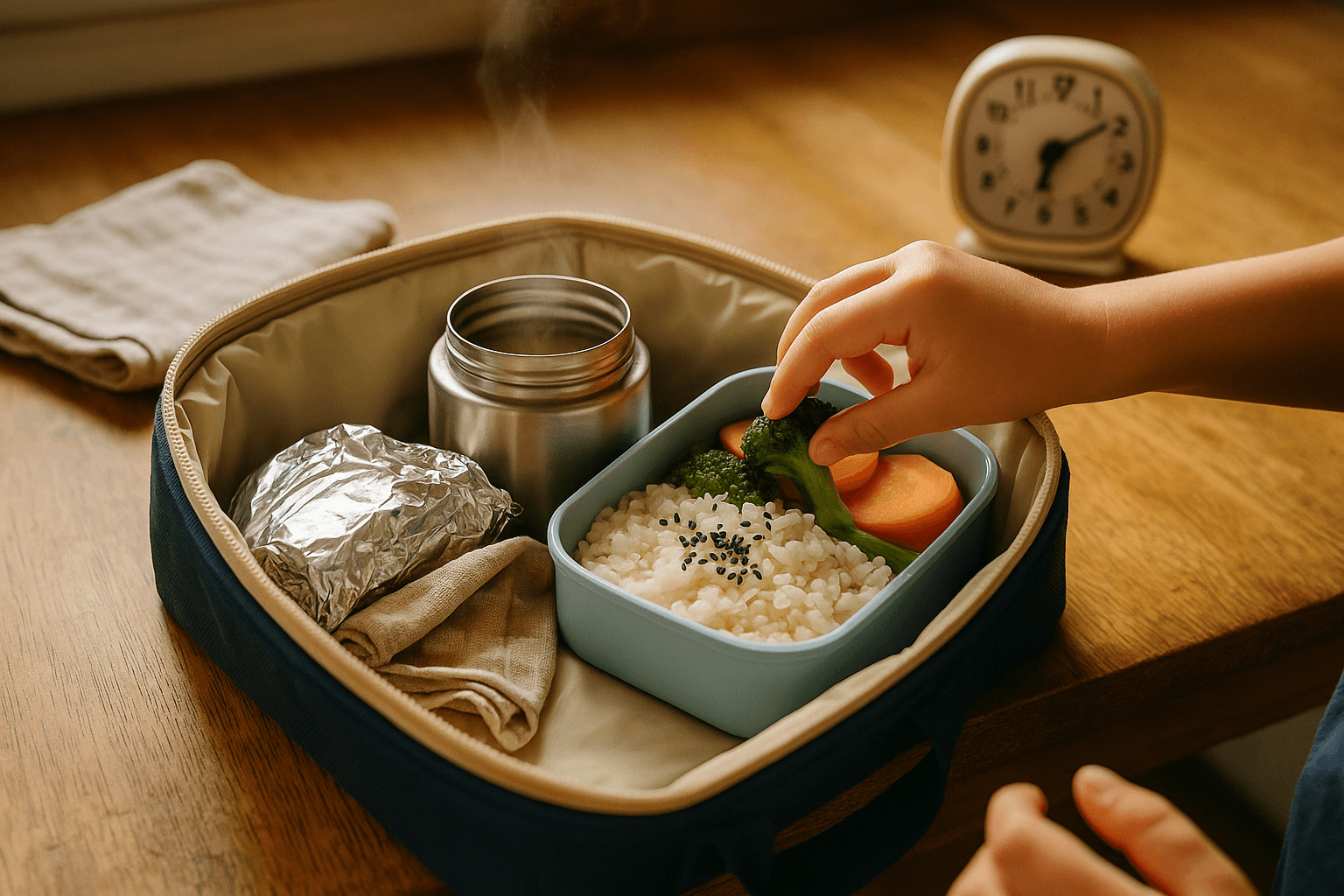
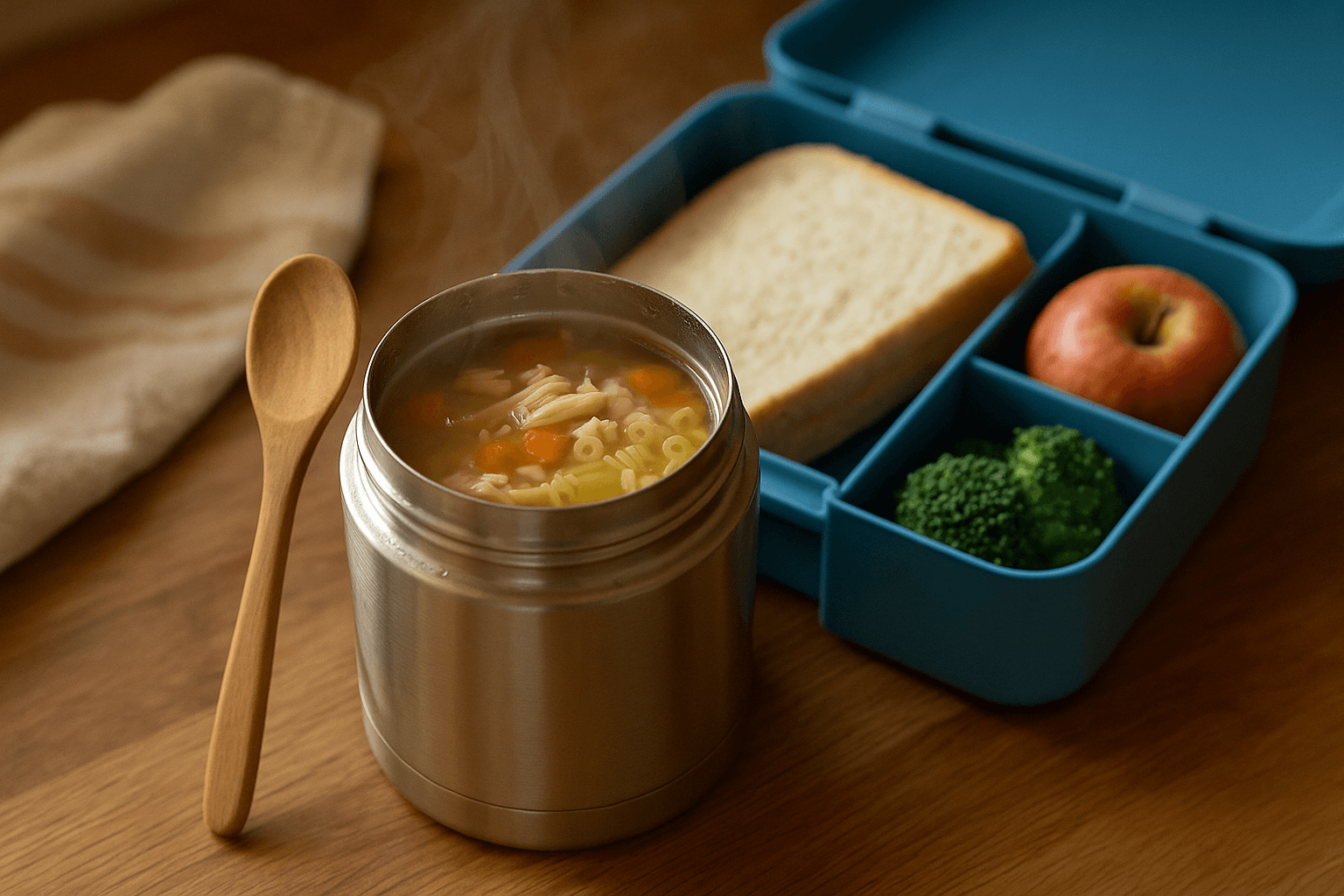
- Roast lamb: Slice 80g cold, pack with rice balls or carrot batons. Or warm in a Thermos FUNtainer Food Jar with a few roasted vegetables — pack it hot at 7am and it'll still be warm at noon.
- Glazed carrots: Cut into batons when cold. Pack as-is or warm in a thermos.
- Hard-boiled eggs: Peel, halve, pack with hummus. Two eggs = 12g protein.
- Roasted potatoes or rice: Form into rough balls with herbs and a little olive oil. Refrigerate overnight, pack cold.
- Leftover vegetables (peas, beans, broccoli): Fold into frittata cups or rice paper rolls.
For our broader approach to this, see leftover dinner to lunchbox ideas — the same logic applies year-round, not just at Easter.
Food safety note: Pack leftovers within 2 hours of the food cooling to below 60°C. Use within 24 hours. Follow the 4-hour rule for food safety — the cumulative time food spends between 5°C and 60°C should not exceed 4 hours total, including packing, transit and time in the lunchbox before eating.
Don't pack Sunday for Tuesday without checking the fridge first
Leftovers packed on Sunday night for a Tuesday lunchbox are at the edge of safe use-by. If in doubt, freeze Sunday night and thaw in the fridge Monday morning.
Nut-free and allergy-safe notes
All 10 ideas are naturally nut-free and compatible with standard Australian school food policies. A few secondary allergen notes worth checking:
- Eggs: Frittata cups, patties, muffins and energy balls all contain egg. Verify no egg allergies in your child's class if sharing.
- Sesame: Rice paper rolls are naturally sesame-free, but some dipping sauces (hoisin, certain soy blends) contain sesame. Check the label or make your own sweet chilli dip instead. Some schools restrict sesame — check your school's policy.
- Dairy: Cream cheese dips, feta and cheese in muffins and scrolls contain dairy. Substitute hummus for cream cheese, and nutritional yeast for feta if dairy is a concern.
- Vegemite: A small number of schools restrict yeast extract products. It's rare, but worth checking if you're new to the school.
For a full framework on navigating school allergen policies, the complete guide to allergen-free school lunches covers the specifics by state.
The Australian Government's Allergy & Anaphylaxis guidelines are also worth bookmarking if your child's school has a formal allergy management plan.
Make it look Easter-themed in under 2 minutes
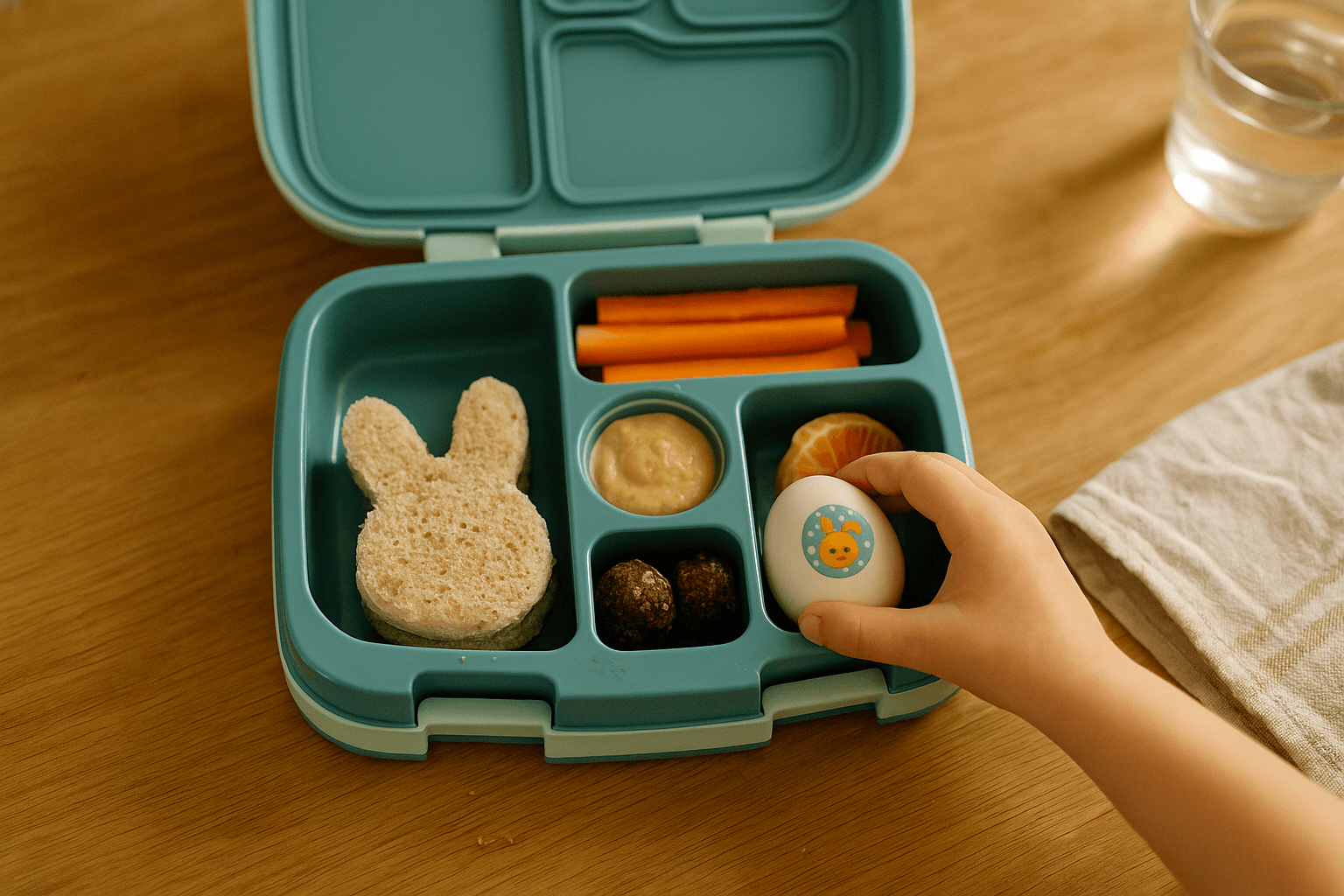
Easter theming in a lunchbox doesn't require cookie cutters, food art or themed picks. It requires colour — and you've already got it in the ingredients.
- Orange: carrots, pumpkin patties, capsicum
- Yellow: corn in frittata, yellow capsicum
- Green: peas, cucumber, snow peas, parsley
- Pink/red: beetroot, cherry tomatoes, pink ham
- White: eggs, cream cheese, rice paper
Arrange items in rows or a loose nest pattern in a bento box with compartments — the separation does the visual work. The Yumbox Tapas (6 compartments), Bentgo Kids Lunch Box and Sistema Bento Lunch Box all work well for this. For more on compartment strategy, see our bento box assembly hacks.
Add a handwritten note or a small Easter sticker on the lid. That's it. Total extra time: 90 seconds.
20 lunchbox ideas on one page
Free cheat sheet for Easter and beyond — print it, stick it on the fridge, done.
Cost per serve: budget breakdown
According to Flinders University research published in Appetite (2026), Australian parents spend around $6 per day on their child's lunchbox. Every idea here fits inside that.
Cost per serve — all 10 Easter lunch box ideas
A full lunchbox — one main, one side, one small treat — lands between $2.65 and $4.40 depending on what you choose. That's comfortably inside the $6/day budget, with room for fruit and a drink. For a full analysis of where lunchbox spend goes, see our cost per lunchbox breakdown.
The lamb rice balls appear most expensive at $2.10, but that cost assumes Easter Sunday leftovers. Buying fresh lamb for the purpose would be $3.60+. The leftover angle saves roughly $1.50 per serve.
Packing tips: keeping it fresh, safe and school-friendly
Fresh and safe are not the same thing. A lunchbox can look fine and still be in the temperature danger zone by recess.
- Pack protein and vegetables in separate compartments to prevent moisture transfer and sogginess.
- Use an ice pack or frozen water bottle in every lunchbox containing egg, meat or dairy. The Bentgo Reusable Ice Packs and Fit & Fresh Cool Coolers Ice Packs both stay cold for 4–6 hours, which covers the school day. The PackIt Freezable Lunch Bag has the ice built into the bag lining — useful if your child loses ice packs regularly.
- Pack dips (hummus, cream cheese) in a small separate container. Add to the main compartment just before the child leaves, or let them do it at school.
- Label any items with secondary allergen information if your school has a shared eating policy.
- Don't pack Sunday night for Tuesday morning without checking the fridge temperature and the 24-hour rule on leftovers.
- Include a small fork or spoon for patties and muffins. Kids who struggle to pick up food often just leave it.
The Australian Institute of Food Safety has a clear summary of cold chain requirements for school lunchboxes if you want the specifics.
Nutrition check
Only 4.6% of Australian children were consuming the recommended daily intake of vegetables in 2022–23, according to ABS National Health Survey data cited by the Obesity Evidence Hub. That's a confronting number, and it's the reason vegetable variety in the lunchbox matters more than any individual food choice.
Here's how the 10 ideas above map to core food groups:
- Protein: Every idea includes at least one protein source — eggs, tuna, chicken, lamb, chickpeas, cheese or ham. Target 15–20g per lunchbox for primary school age.
- Vegetables: Carrots, capsicum, zucchini, pumpkin, peas, beetroot and cucumber appear across the list. Aim for 2 different vegetables per lunchbox — not just a token piece of cucumber.
- Whole grains: Oats in energy balls, wholemeal flour in muffins and scrolls (if you make the swap — standard flour works too).
- Dairy: Cheese, cream cheese and feta across multiple ideas. Calcium matters for growing bones.
- Healthy fats: Olive oil in dips, eggs, tuna and hummus all contribute. These support brain development and keep kids full through the afternoon.
For more on hitting vegetable targets without a fight, see how to sneak vegetables into every lunchbox.
Handling picky eaters at Easter
Picky eating at Easter has a specific wrinkle: themed food can trigger rejection before the child even tastes it. A lunchbox that looks different from Tuesday's normal lunch is a risk.
The practical approach:
- Don't change the base, change the detail. If your child eats cheese muffins, make cheese muffins — don't switch to pumpkin patties because they're more colourful. Add carrot batons on the side instead.
- Use the leftover connection. If they ate roast lamb on Sunday and enjoyed it, remind them it's the same food, just cold. Familiarity is the most powerful tool you have.
- Involve them in prep. Kids who roll their own rice paper rolls or decorate energy balls with sprinkles are significantly more likely to eat them. It takes 5 extra minutes on Sunday night.
- Offer two options, not one. Pack a frittata cup AND a scroll. Let them choose at school. Control is a strong motivator for this age group.
- Skip the Easter theme if it's a barrier. Some kids reject anything that looks different. Pack normally. Put the Easter sticker on the note, not the food.
For a deeper look at the psychology behind why kids won't eat lunch at school, see why kids won't eat lunch — the reasons are more systemic than most parents realise.
Quick reference checklist
Easter lunchbox prep checklist
Easter lunch box ideas — common questions
How useful was this?
20 lunchbox ideas, one printable page
Easter sorted — now what? Get the free cheat sheet with 20 ideas to rotate all term.
Written by Pat
Dad of two, Melbourne. Half Chinese, raised on incredible food. I make quick school lunches and test every piece of gear before recommending it. No bento art — just real food made with love.