In this article
Right, let's cut through the chaos of weeknight lunch packing. You know that Sunday night panic when you realise five empty lunchboxes are staring at you, and Monday morning is 12 hours away? I've been there, mate.
Here's the thing: the traditional assembly line method works brilliantly for basic lunches, but bento boxes need a different approach. You're dealing with multiple compartments, varied textures, and visual appeal that actually matters to fussy eaters.
I've cracked the code on packing 5 completely different bento lunches in just 20 minutes. Not similar lunches with tiny variations – genuinely different combinations that'll keep your kids interested all week. And before you ask: yes, they'll actually eat them.
$4.48
average daily cost of Australian kids' lunchboxes
Health Promotion International 2024
37.3% of energy comes from unhealthy foods
The 20-Minute Bento Box Assembly Line Method
Forget packing one lunch at a time. That's amateur hour and exactly why you're spending 45 minutes every Sunday evening muttering under your breath.
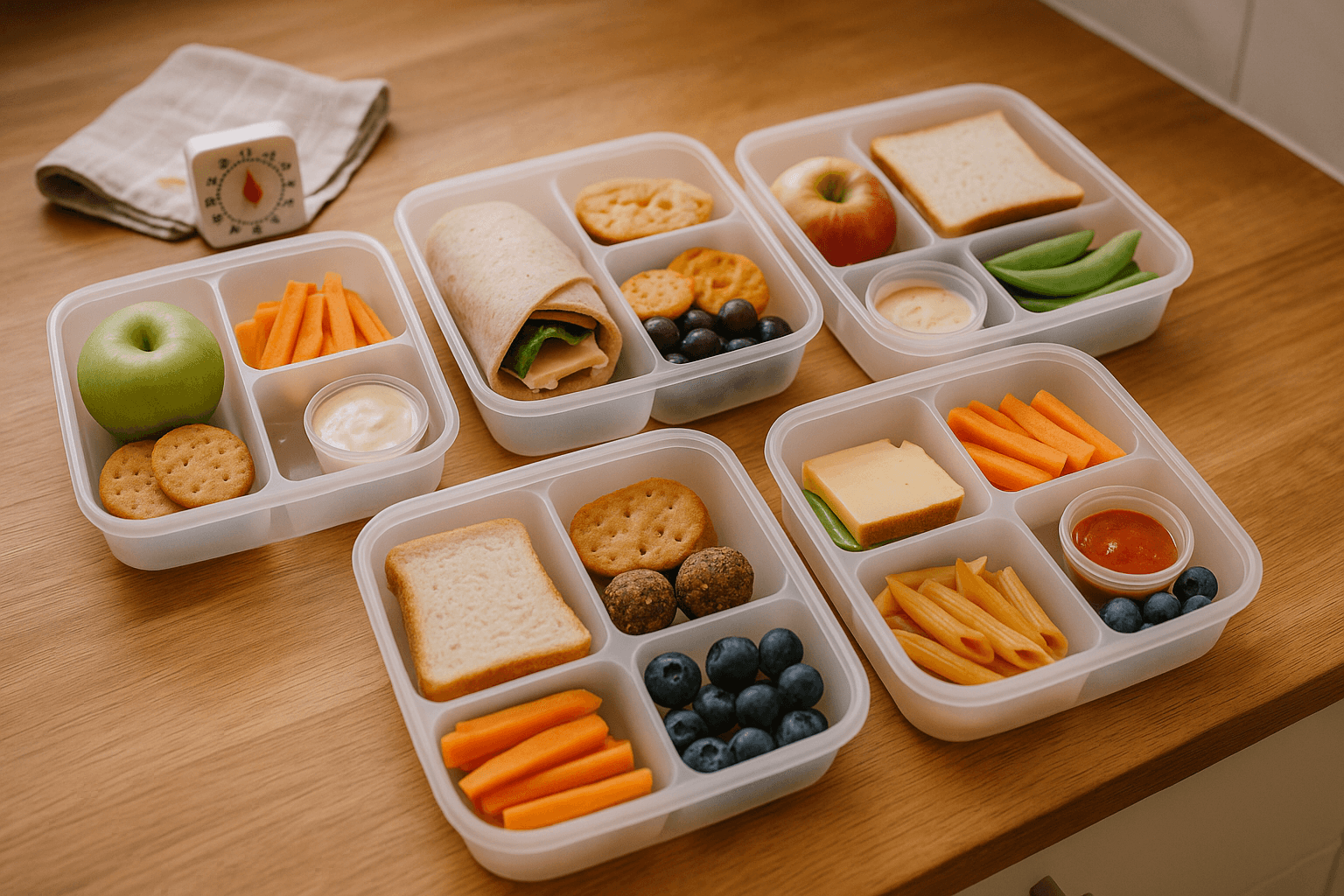
The assembly line approach for bento boxes works like this: 5 minutes prep, 15 minutes assembly. You're not making 5 lunches – you're completing 5 rounds of the same task across all boxes simultaneously.
Why this beats individual packing:
- Your brain stays in "protein mode" or "veggie mode" instead of constantly switching
- Ingredients stay out and accessible instead of constant fridge trips
- You spot gaps and balance issues across the week before sealing boxes
- Clean-up happens once, not five times
The cost savings are significant too. With Australian families spending $4.48 daily on average (and 37.3% of that on unhealthy foods), this method helps you hit around $3.20 per lunch while dramatically improving nutrition quality.
The secret isn't working faster – it's working smarter by batching identical tasks across all five lunchboxes simultaneously.
Setting Up Your Bento Assembly Station
Your workspace determines your success. I learned this the hard way after spending 10 minutes hunting for lids while my perfectly portioned ingredients dried out.
Essential layout (left to right on your bench):
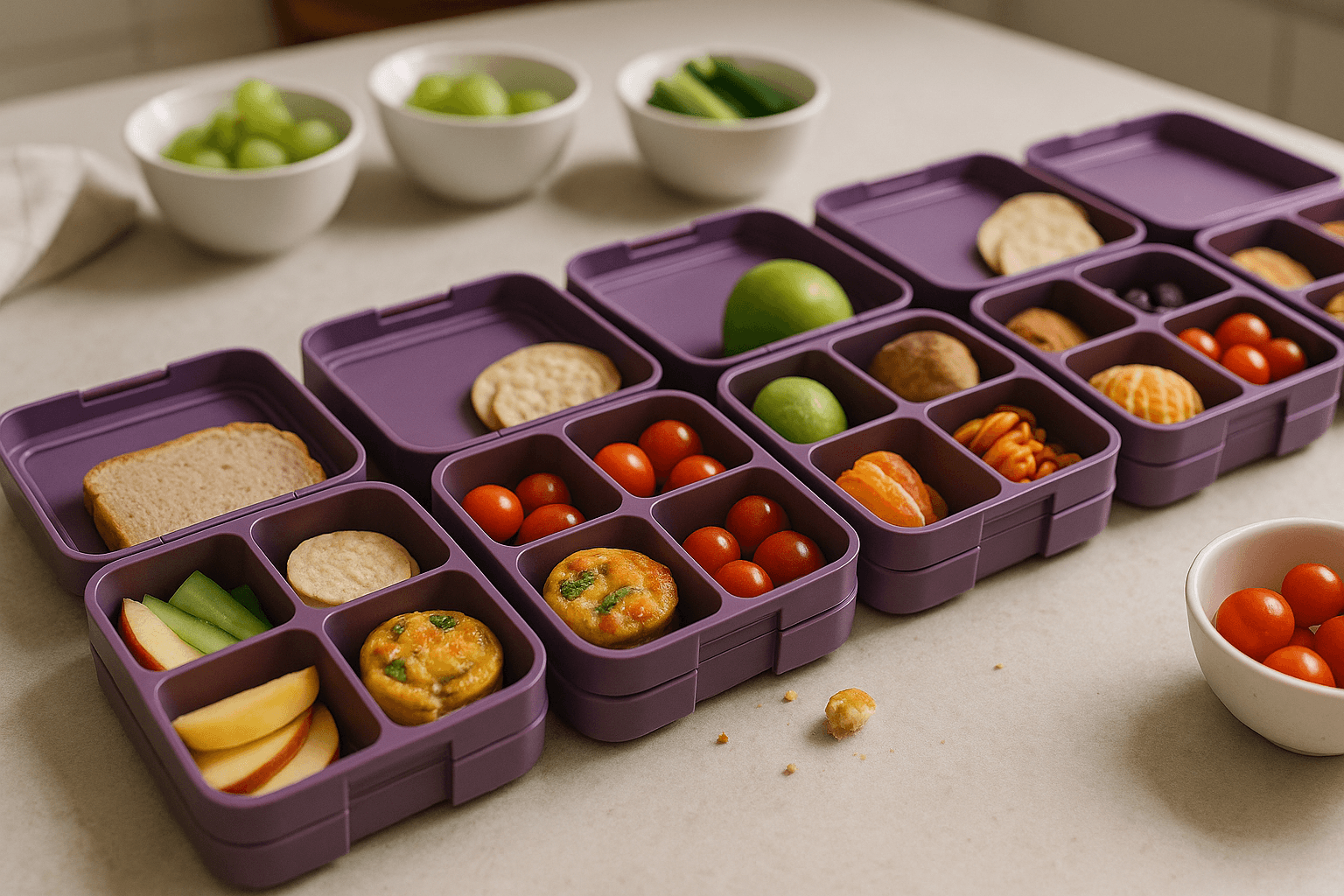
- 5 bento boxes, lids off, arranged in a line
- Proteins in small bowls (cooked and cooled)
- Grains/bases in larger bowls
- Fresh components (cherry tomatoes, cucumber, berries)
- Small tools: mini muffin scoop, silicone cups, small spoons
For Australian conditions, everything needs to be completely cooled before assembly. Our climate doesn't forgive warm food packed into sealed containers – you're asking for bacterial growth and spoiled lunches.
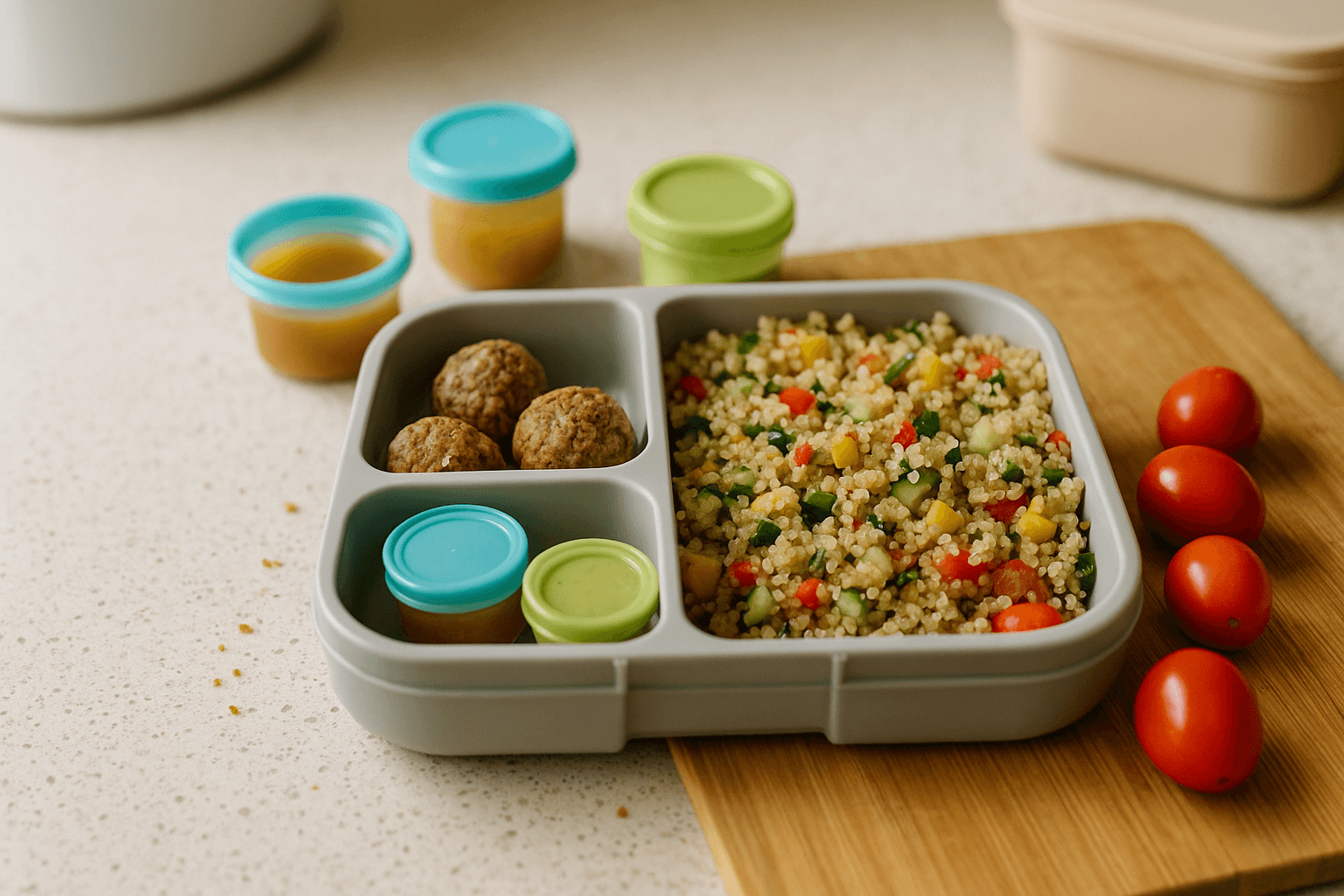
The Sistema Bento Lunch Box works brilliantly for this method because the compartments are clearly defined and the right size for kid portions. No guesswork on quantities.
Assembly Station Setup
Clear and clean your largest bench space
You need room for 5 open lunchboxes plus ingredients – at least 1.2 metres of bench space
Arrange boxes in production line
Left to right, all lids off and set aside in order. Open all compartments now, not during assembly
Stage ingredients in serving bowls
Everything pre-portioned and ready to scoop. Use ice cream containers or large bowls for easy access
Set out assembly tools
Mini scoop, small spoons, silicone cupcake cups for separation, clean tea towel for spills
5 Base Combinations That Create Weekly Variety
This is where bento boxes shine over regular lunchboxes. The compartments force you to think in balanced combinations: protein + grain + veggie + fruit. But the magic happens when you mix and match these components across the week.
The 5 base formulas I rotate:
- Mini frittata + rice crackers + cherry tomatoes + grapes
- Cheese cubes + wholemeal wraps + cucumber sticks + apple slices
- Leftover roast chicken + quinoa salad + carrot sticks + berries
- Hard-boiled egg + pita triangles + capsicum strips + orange segments
- Ham roll-ups + brown rice + sugar snap peas + strawberries
These follow allergen-free guidelines – all nut-free and easily adaptable for dairy or gluten restrictions.
The Mini Chicken and Corn Frittata Cups are my secret weapon here. Batch cook 12 on Sunday, freeze half for next week. Kids think they're getting something special, but you've done the work once.
Visual Appeal Hack
Use the "rainbow rule" – aim for 4 different colours across the compartments. Kids eat with their eyes first, especially the fussy ones. Red tomatoes, orange carrots, green cucumber, purple grapes – suddenly lunch looks exciting.
Weekend Prep: Batch Components That Last All Week
Sunday prep session: 30 minutes, maximum impact.
This isn't about cooking everything on Sunday – it's about strategic preparation that makes Monday's assembly effortless. Focus on components that improve with time or eliminate weekday decision fatigue.
Your 30-minute Sunday hit list:
- Minutes 1-10: Wash and chop all vegetables, store in airtight containers
- Minutes 11-20: Cook Cheesy Zucchini Slice Squares (12 squares = 6 lunches worth)
- Minutes 21-25: Portion fruits that don't brown (grapes, berries, melon)
- Minutes 26-30: Set up assembly station for Monday morning
Food safety in our climate is non-negotiable. Everything must be completely cooled before storage, and I use the Sistema To Go Dressing Pot 4-Pack for wet ingredients like dips or dressings – keeps them separate until eating time.
Components that stay fresh for 5 days:
- Cut vegetables (stored with damp paper towel)
- Cooked grains (rice, quinoa, pasta)
- Hard-boiled eggs
- Cheese cubes
- Most fruits (except bananas and cut apples)
Never prep ahead:
- Cut apples or pears (brown overnight)
- Leafy greens (wilt quickly)
- Anything with mayo-based dressing
For a more comprehensive Sunday prep guide, I cover the full meal prep system including dinners.
Sunday 30-Minute Prep Session
Wash and chop vegetables
All raw veggies for the week. Pat dry and store in airtight containers with paper towel
Cook protein components
Frittata cups, zucchini slice, or whatever protein base you're using this week
Portion stable fruits
Grapes, berries, melon pieces. Leave apples and bananas for daily prep
Set up Monday station
Clean bench space, arrange containers, test that everything fits in your assembly line
Assembly Line Steps: From Prep to Packed
Monday morning: 20 minutes from ingredients to sealed lunchboxes.
This is where the magic happens. You're not thinking about individual lunches – you're completing tasks across all five boxes before moving to the next component.
Step 1: Proteins (5 minutes) Start with your protein component in the largest compartment of each box. This anchors the meal and prevents you from overpacking other sections.
- Box 1: 2 mini frittata cups
- Box 2: 30g cheese cubes
- Box 3: 60g shredded roast chicken
- Box 4: 1 hard-boiled egg, halved
- Box 5: 2 ham roll-ups
Step 2: Grains and bases (5 minutes) Second largest compartment gets your carbohydrate base. This creates the foundation that makes lunch filling rather than just snacky.
- Box 1: 8 brown rice crackers
- Box 2: 2 wholemeal wrap triangles
- Box 3: 1/3 cup quinoa salad
- Box 4: 4 pita triangles
- Box 5: 1/3 cup cooked brown rice
Step 3: Fresh components (5 minutes) Vegetables in one compartment, fruits in another. This is where your Sunday prep pays off – everything's already washed, chopped, and ready to portion.
Step 4: Quality control and sealing (5 minutes) Quick visual check across all boxes, add any forgotten elements, seal with ice packs. The Bentgo Kids Lunch Box seals beautifully here – no leaks, no mixing between compartments.
Assembly Line Quality Check
Australian Climate Storage Solutions
Our heat will destroy the best-planned lunch if you don't nail the storage. I've seen too many beautifully packed bento boxes turn into science experiments by recess.
Ice pack placement strategy: One ice pack isn't enough for Australian conditions. Use two smaller packs – one on top, one on the side of the lunchbox inside the insulated bag. The Fit & Fresh Cool Coolers Ice Packs (4-pack) are thin enough to fit without taking up lunch space.
Heat-sensitive food handling:
- Dairy products (cheese, yoghurt) go in the compartment closest to ice packs
- Proteins need to be completely cooled before packing – lukewarm is not good enough
- Fruits with high water content (grapes, berries) help maintain cool temperature
- Never pack warm rice or pasta – bacterial growth accelerates in heat
School bag positioning: Lunchbox goes in the main compartment, not side pockets where it's exposed to more heat. If your child's classroom has air conditioning, encourage them to keep bags inside, not in lockers or outside areas.
For extreme weather days above 35°C, check my extreme weather strategies – sometimes you need backup plans.
Get Your Free Sunday Prep Planner
Printable weekly planner with prep lists and assembly guides for 5 days of lunches
Cost-Effective Shopping for Assembly Success
The assembly line method only works if you shop strategically. Random ingredients lead to random lunches, which leads to kids rejecting food, which leads to expensive backup purchases.
Weekly shopping template approach:
- 2 protein options (eggs, cheese, leftover roast chicken)
- 3 grain/base options (wraps, crackers, cooked rice)
- 4 vegetable types (different colours and textures)
- 3 fruit varieties (mix of quick-eat and requires peeling)
Bulk buying that makes sense:
- Rice crackers and wholemeal wraps (store well, used weekly)
- Frozen berries (cheaper than fresh, perfect for bento compartments)
- Canned tuna or salmon (protein backup when fresh runs out)
- Block cheese (portion yourself vs. expensive pre-cut)
Seasonal Australian produce rotation keeps costs down and nutrition up. Summer stone fruits, winter citrus, autumn apples – work with what's abundant and affordable.
The goal is reducing pre-packaged snack dependency. Australian kids average 3 pre-packaged snacks per lunch – that's where your $4.48 daily average gets blown out. Banana Oat Energy Balls made in bulk cost 40c each vs. $1.20 for packaged equivalents.
For more detailed budget-friendly lunch strategies, I break down the full cost analysis.
Troubleshooting Assembly Line Challenges
"My kids reject the new combinations" Introduce one new element per week, not complete overhauls. If they love Monday's combo, repeat it Wednesday with one small change. The proven bento combinations I share have been tested on real kids, including fussy eaters.
"20 minutes is still too long for busy mornings" Move more prep to Sunday. Pre-portion everything into small containers so Monday becomes pure assembly. Or prep 2-3 lunches Sunday night, 2-3 Monday morning.
"Food safety concerns with advance prep" When in doubt, prep components separately and combine fresh daily. Cooked proteins can be stored 3 days safely if cooled properly. Raw vegetables last longer than cooked ones.
"Scaling up for multiple children" The system scales beautifully – just multiply ingredients and add more bench space. Two kids = 10 boxes in 25 minutes. Three kids = 15 boxes in 30 minutes. The efficiency gains compound.
Start Small
Don't attempt this system during your busiest week. Pick a quieter weekend to set up and test. Once you've done it twice, the 20-minute timing becomes realistic.
The bento box assembly line isn't just about saving time – it's about creating a sustainable system that delivers variety, nutrition, and cost savings week after week. Your kids get better lunches, you get Sunday evenings back, and everyone wins.
Start with the basic setup this weekend. Master the timing with simple combinations before getting creative. Within a month, you'll wonder why you ever packed lunches any other way.
How useful was this?
Get Your Free Sunday Prep Planner
Streamline your bento assembly with our printable weekly planner and shopping lists.
Written by Pat
Dad of two, Melbourne. Half Chinese, raised on incredible food. I make quick school lunches and test every piece of gear before recommending it. No bento art — just real food made with love.